
Attic Ventilation Installation and Upgrades
Professional attic ventilation installation and improvement in Nampa, Idaho. Ridge vents, soffit vents, and balanced airflow systems to prevent ice dams and extend roof life from Bork Nampa Roofing Contractors.
Attic Ventilation Services in Nampa, Idaho
Attic ventilation is one of the most underappreciated factors in roof performance and home comfort. A well-ventilated attic keeps your roof cooler in summer, prevents ice dams in winter, removes moisture that causes mold and structural damage, and helps your heating and cooling systems work more efficiently. Despite its importance, inadequate attic ventilation is one of the most common issues we find during roof inspections across Nampa and the Treasure Valley.
At Bork Nampa Roofing Contractors, we design and install attic ventilation systems that are calculated for your specific home rather than generic one-size-fits-all solutions. Proper ventilation requires a balance between intake air at the soffits and exhaust air at or near the ridge, and getting that balance right is what makes a ventilation system actually work.
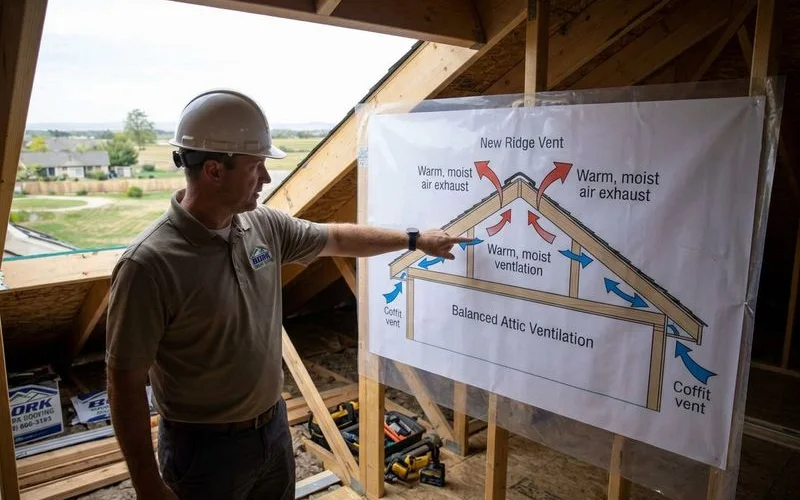
How Attic Ventilation Works
The principle behind attic ventilation is straightforward, but the execution matters enormously. The goal is to create a continuous flow of air through the attic space, entering at the lowest point of the roof through soffit vents and exiting at the highest point through ridge vents or roof vents.
This airflow accomplishes several things simultaneously. In summer, it carries superheated air out of the attic before it radiates down into your living spaces. In winter, it maintains a cool, dry attic that prevents ice dams and moisture condensation. Year-round, it removes humid air that can cause mold growth and wood rot on your roof deck and framing.
The critical requirement is balance. You need roughly equal intake and exhaust capacity for the system to function properly. Too much exhaust without adequate intake creates negative pressure that can pull conditioned air from your living spaces through ceiling penetrations. Too much intake without adequate exhaust means hot and humid air has nowhere to go. Our ventilation assessments measure both sides of the equation and design a balanced system for your specific home.
Ventilation Components We Install
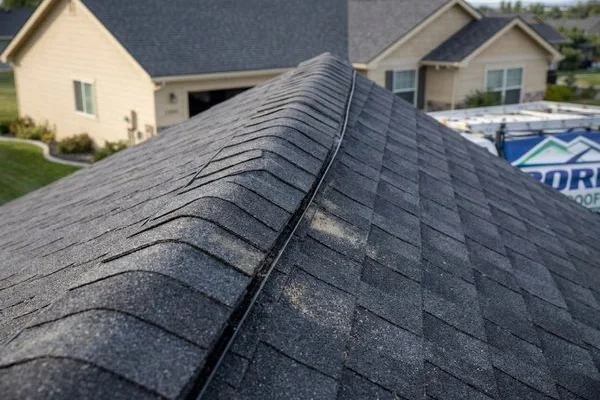
Ridge Vents. Ridge vents run along the peak of your roof, providing continuous exhaust along the highest point where hot air naturally rises and exits. They are the most effective exhaust vent because they work along the entire ridge rather than at isolated points. Ridge vents are virtually invisible from the ground since they are covered by ridge cap shingles, maintaining your home’s clean roofline appearance. We install ridge vents that include a weather filter to prevent rain and snow infiltration.
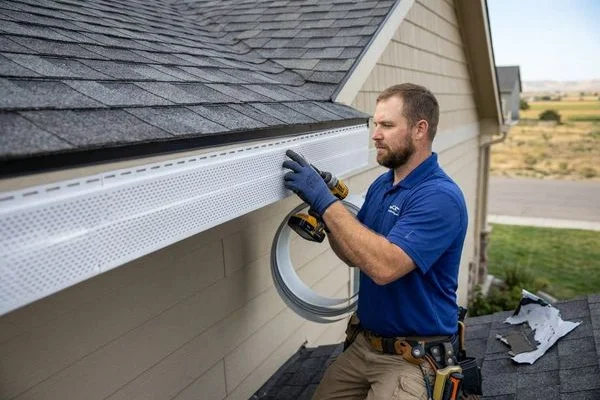
Soffit Vents. Soffit vents are installed in the soffit panels under your roof overhang, providing the intake air that feeds the entire ventilation system. Without adequate soffit intake, even the best ridge vent cannot function effectively. We install continuous strip vents or individual vented soffit panels depending on your home’s construction, ensuring sufficient net free area for proper airflow.
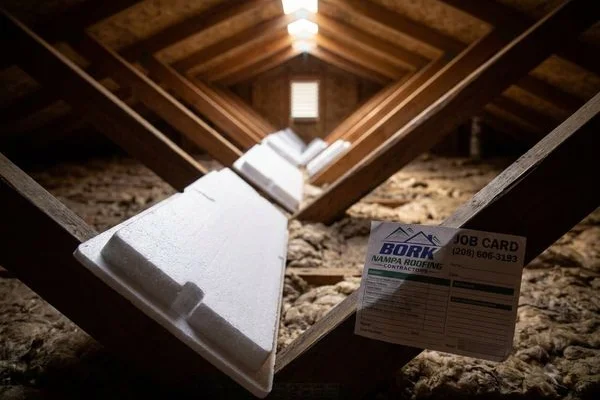
Insulation Baffles. Baffles, also called vent chutes or rafter vents, are installed between the rafters at the eave to maintain a clear air channel from the soffit vent to the attic space. Without baffles, blown-in or batt insulation can block the soffit vents and eliminate intake airflow entirely. We install baffles as part of every ventilation project to ensure long-term performance.
Box Vents and Turbine Vents. For roofs where a continuous ridge vent is not practical, individual box vents or turbine vents provide exhaust points at strategic locations. We calculate the number and placement of these vents to provide adequate exhaust capacity for your attic volume.
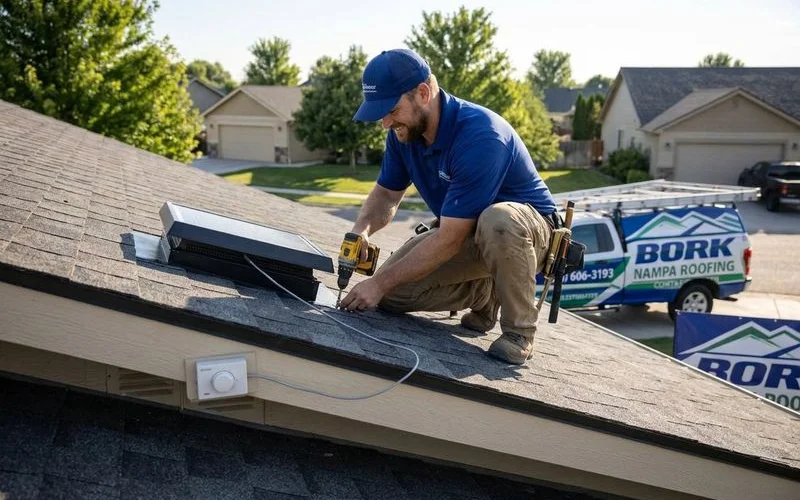
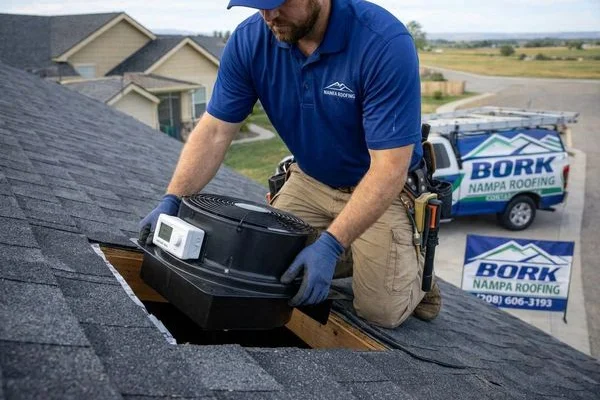
Powered Attic Fans. In some situations, passive ventilation alone is not sufficient. Powered attic fans with thermostatic controls can move large volumes of air when attic temperatures exceed a set threshold. These are particularly useful in Nampa’s hottest summer months when attic temperatures can exceed 150 degrees in under-ventilated spaces. We install solar-powered and electric options depending on your preference and electrical access.
Why Ventilation Matters in Idaho’s Climate
Nampa’s climate creates two distinct ventilation challenges that make proper attic airflow especially important for homeowners in the Treasure Valley.
Summer Heat Buildup. During July and August, Nampa regularly sees temperatures above 95 degrees. Under a dark asphalt roof, an under-ventilated attic can reach 150 to 160 degrees. This extreme heat radiates down through the ceiling insulation into your living spaces, forcing your air conditioner to work harder and driving up energy costs. The heat also accelerates the aging of your shingles from below, shortening their lifespan. Proper ventilation can reduce attic temperatures by 30 to 40 degrees, easing the burden on your cooling system and extending the life of your roof.
Winter Ice Dams. Ice dams are a significant concern for Nampa homes during winter. When an under-ventilated attic traps warm air from your living spaces, the heat melts snow on the upper portion of the roof. The meltwater flows down to the cold eave, where it refreezes and creates a dam of ice. Water pools behind the dam and backs up under the shingles, causing interior leaks and damage to ceilings, walls, and insulation.
Proper ventilation keeps the entire roof surface at a uniformly cold temperature in winter by flushing warm attic air out through the ridge and replacing it with cold outside air through the soffits. When the roof surface stays cold, snow melts evenly or not at all, eliminating the conditions that create ice dams.
Moisture Control. Daily activities like cooking, showering, and laundry generate moisture that rises into the attic through ceiling penetrations. Without ventilation, this moisture condenses on cold surfaces in winter, promoting mold growth and wood rot on the roof deck and framing. Over time, moisture damage can compromise the structural integrity of your roof and create health concerns for your family.
Energy Savings from Proper Ventilation
Homeowners are often surprised by how much proper attic ventilation affects their energy bills. In summer, reducing attic temperatures by 30 to 40 degrees means your air conditioning system does not have to overcome the radiant heat pouring through the ceiling. Many Nampa homeowners report noticeable improvements in upstairs comfort and lower cooling costs after a ventilation upgrade.
In winter, proper ventilation actually saves energy too. By preventing moisture buildup in the attic, your ceiling insulation stays dry and effective. Wet insulation loses much of its R-value, so keeping it dry maintains the thermal barrier between your heated living space and the cold attic above.
Ventilation upgrades are one of the most cost-effective home improvements you can make, often paying for themselves in reduced energy costs within a few years while simultaneously extending your roof’s lifespan and preventing expensive moisture damage.
Signs Your Attic Needs Better Ventilation
Watch for these indicators that your Nampa home may have a ventilation problem.
- Second-floor rooms are significantly hotter than ground-floor rooms in summer
- Ice dams form along the eaves in winter
- Frost or moisture is visible on the underside of the roof deck in the attic
- Mold or musty odors in the attic
- Roof shingles are aging prematurely with curling or cracking
- Your energy bills seem higher than expected for the size of your home
- Paint is peeling on exterior soffits or gables
If you notice any of these signs, a ventilation assessment can determine whether your attic airflow is adequate. In many cases, relatively modest ventilation improvements can make a significant difference. Our roof maintenance programs also check ventilation as part of each visit.
Schedule Your Free Ventilation Assessment
If you suspect your attic ventilation is inadequate, call Bork Nampa Roofing Contractors at (208) 606-3193 for a free assessment. We will evaluate your current ventilation, calculate what your home needs, and recommend the most effective solution for your budget. We serve homeowners throughout Nampa, Caldwell, Meridian, Boise, Eagle, Star, Kuna, and the entire Treasure Valley.
Our Work
How Our Attic Ventilation Process Works
Ventilation Assessment
We evaluate your current attic ventilation by measuring intake and exhaust capacity, checking for blocked vents, and calculating the net free area needed based on your attic square footage.
System Design
We design a balanced ventilation plan that ensures adequate intake at the soffits and exhaust at the ridge or roof vents, following building code requirements and manufacturer guidelines.
Professional Installation
Our crew installs the ventilation components with proper weatherproofing, ensuring no roof leaks are introduced and all new openings are flashed and sealed correctly.
Performance Verification
We verify airflow through the system, check that insulation baffles are properly positioned, and confirm the ventilation meets or exceeds code requirements for your attic space.
Free Inspections - No Obligation
Get an honest assessment and transparent estimate. Lifetime workmanship warranty on qualifying projects.
Why Choose Bork for Attic Ventilation
Ventilation Science, Not Guesswork
We calculate the exact ventilation requirements for your attic based on square footage and building codes, not estimates or rules of thumb. Your system is engineered to perform correctly.
Roofing-Integrated Approach
As roofing specialists, we install ventilation as part of the complete roof system. Every cut, opening, and flashing detail maintains your roof's waterproof integrity.
Idaho Climate Expertise
We understand how Nampa's hot summers and cold winters create specific ventilation challenges and design systems that address both heat buildup and ice dam prevention.
Improves Energy Efficiency
Proper attic ventilation reduces the heat load on your air conditioning in summer and prevents moisture buildup in winter, lowering your energy costs year-round.
Attic Ventilation Questions and Answers
How do I know if my attic has inadequate ventilation?
What causes ice dams on Nampa roofs?
Can you add ventilation to my existing roof without a full replacement?
Get a Free Attic Ventilation Estimate Today
Contact Bork Nampa Roofing Contractors today for a free inspection and estimate. Licensed, insured, and serving Nampa and the entire Treasure Valley.