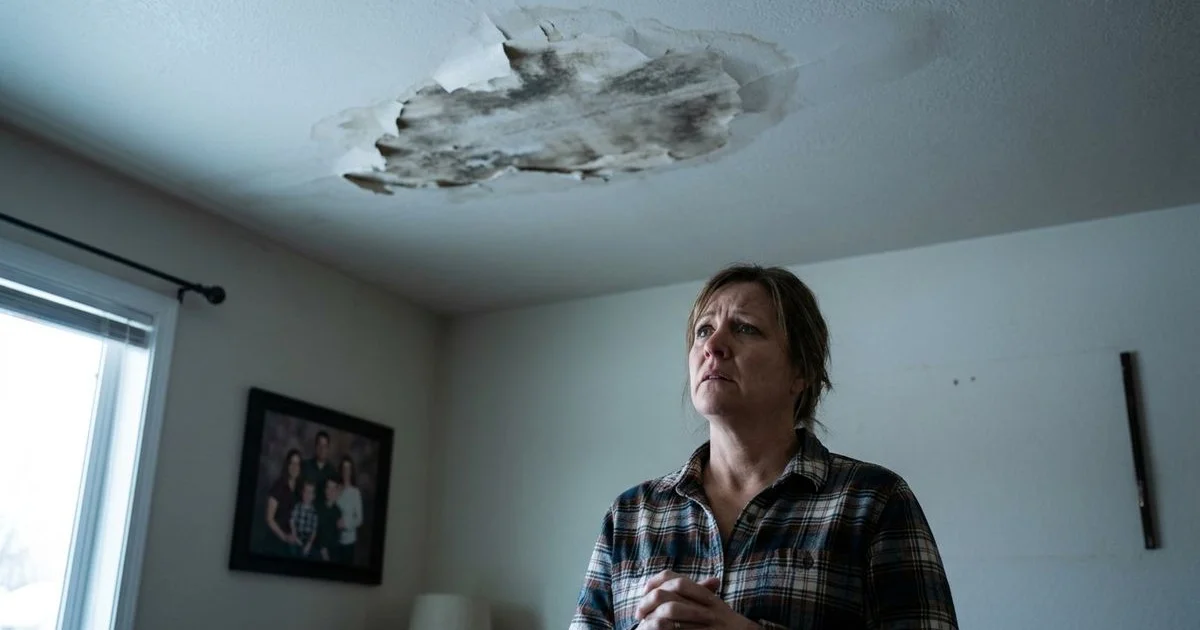
Some of the most expensive home repairs we see in Nampa don’t start with a crash or a bang. They start silently, often months before a water stain ever appears on your ceiling.
According to 2024-2025 insurance data, water damage and freezing are now the second most common cause of property claims in the U.S. Roughly 1 in 60 insured homes will file a claim this year, with the average payout reaching nearly $12,500. That is a staggering cost for a problem that usually begins as a minor maintenance issue.
We want to help you get ahead of that curve. In this guide, we will break down the five most common leak sources we encounter in the Treasure Valley and provide the 2026 cost data you need to make smart repair decisions.
1. Damaged or Deteriorated Flashing
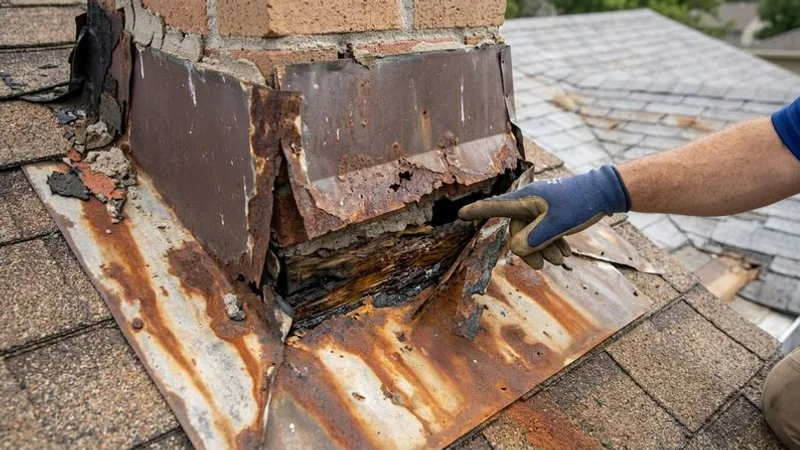
Flashing is the thin metal material installed at every joint and transition on your roof, such as around chimneys, skylights, and vent pipes. Its primary job is to direct water away from these vulnerable intersections where shingles alone cannot seal the gap.
We find that flashing failures are actually more common than shingle failures. In Nampa, the rigid metal expands and contracts differently than the wood framing during our intense freeze-thaw cycles. This movement causes the flashing to warp or pull away over time. Older installations that relied on basic roofing tar rather than proper metal layering are especially prone to failure once that sealant dries and cracks.
The Insider Tip: Check your sealant brand. If you are doing a minor repair, do not use cheap silicone from a big-box store. We recommend a tripolymer sealant like Geocel 2300. It sticks to damp surfaces and stays flexible far longer than standard caulk.
Cost vs. Risk Breakdown:
| Repair Type | Est. Cost (2026) | The “So What?” |
|---|---|---|
| Reseal Flashing | $200 - $600 | A maintenance fix. Use high-grade sealant to get 3-5 years out of it. |
| Replace Flashing | $600 - $1,500 | A permanent solution. Essential if the metal is rusted or bent. |
| Ignore the Leak | $3,000 - $10,000+ | The potential cost of structural repairs and mold remediation if ignored. |
How to fix it: Damaged flashing must be removed and replaced with new aluminum or galvanized steel. You should ensure the new flashing is “step-flashed” (interwoven with shingles) rather than just nailed on top. This provides a physical barrier against water even if the sealant fails years down the road.
2. Cracked or Broken Vent Pipe Boots
Every plumbing vent that exits through your roof is surrounded by a boot that seals the gap between the pipe and the shingles. Standard builder-grade boots are typically made of neoprene rubber.
Our team replaces hundreds of these every year because neoprene simply cannot handle Idaho’s UV exposure for long. After about 7 to 10 years, the rubber becomes brittle and cracks. This creates a direct funnel for rain to enter your attic.
The Upgrade: Stop buying the same rubber boot every decade. We recommend upgrading to a high-temp silicone boot or a specialized product like a Bullet Boot or Perma-Boot. These are made from UV-resistant TPE (thermoplastic elastomer) that can last as long as your shingles.
Vent Boot Lifespan Comparison:
- Neoprene (Standard): Lasts 7-10 years. Prone to cracking in high heat.
- Silicone/TPE (Mid-Range): Lasts 20-35 years. Remains flexible in freezing temps.
- Lead (Premium): Lasts 50+ years. Warning: Local squirrels often chew on lead boots, which can cause leaks.
How to fix it: Replace the entire assembly rather than trying to caulk a crack. A professional will carefully lift the surrounding shingles, remove the old boot, and install a new one with a proper ice-and-water shield underneath.
3. Worn or Missing Shingles
Shingles are your roof’s first line of defense against the elements. When they crack, curl, or blow off, the felt underlayment and plywood decking become exposed to rain and snow.
Nampa experiences wind gusts that frequently exceed 40-50 mph. This is the threshold where older “3-tab” shingles often suffer structural stress. Once the adhesive seal breaks, the shingle flaps in the wind until it tears off completely.
Common causes of damage in the Treasure Valley include:
- Thermal Shock: Rapid temperature swings cause asphalt to expand and contract. This leads to hairline cracks.
- Granule Loss: Hail and age knock off the protective ceramic granules. This exposes the asphalt to damaging UV rays.
- High Winds: Sustained winds lift tabs and break the sealant strip.
- Improper Nailing: Nails placed too high on the shingle (called “high-nailing”) offer almost no wind resistance.
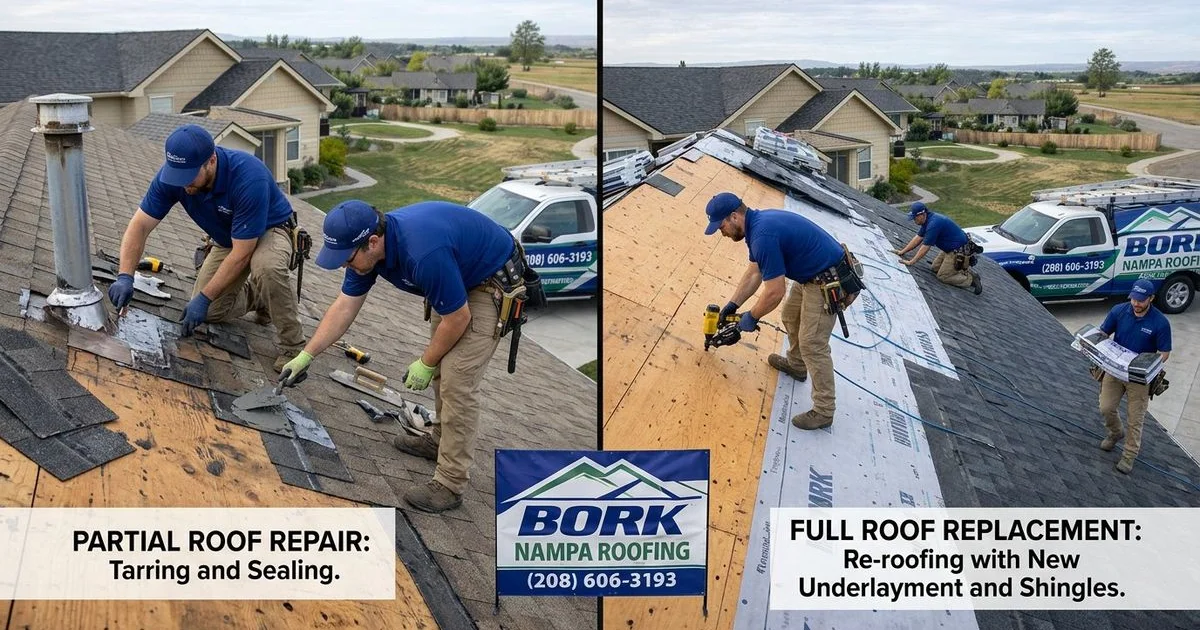
How to fix it: Individual shingles can be replaced if the rest of the roof is flexible and healthy. However, if you see widespread granule loss (check your gutters for a layer of “sand”), the shingles are likely at the end of their life. In this case, a full replacement is often more cost-effective than chasing leaks.
2026 Cost Insight
Minor shingle repairs in our region typically range from $300 to $1,500 depending on the steepness of the roof. If a full replacement is needed, average costs in Idaho have stabilized between $6,400 and $8,200 for a standard residential roof.
4. Clogged Gutters and Poor Drainage
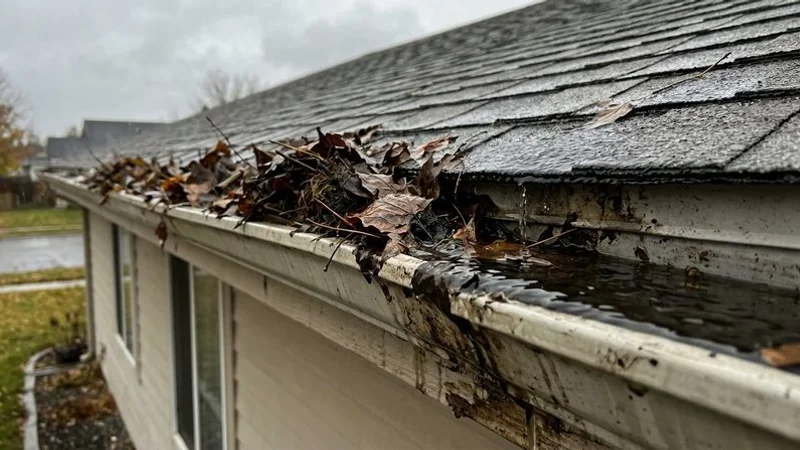
This issue surprises many homeowners because the problem technically isn’t on the roof itself. Your gutters are the engine of your water management system.
When gutters clog with leaves and pine needles, water has nowhere to go but up. During a heavy rain, water pools at the eave and can wick up under the shingles. In winter, this standing water freezes into heavy blocks of ice that can tear gutters right off the fascia board.
The Hidden Cost: A single foot of ice dam can weigh significantly more than your gutters are designed to hold. Beyond the damage to the gutter, the cost to have a professional remove an ice dam in 2026 averages around $1,200 nationally, with complicated steam removals in our area costing up to $2,500.
How to fix it: Clean your gutters at least twice a year. We suggest doing this once in late spring to clear blossoms and seeds, and again in late fall after the leaves drop. If you have mature trees, consider installing high-quality stainless steel mesh gutter guards. Avoid cheap plastic screens that often collapse under the weight of snow.
5. Roof Valley Failures
Valleys are the V-shaped channels where two roof planes meet, handling a concentrated flow of water during storms. Because they carry so much water, they wear out faster than the rest of the roof.
Leaks here are particularly dangerous because they often run along the rafter and drip down into interior walls, causing hidden rot. We often see failures in “closed-cut” valleys, where shingles are woven across the center. If the shingles aren’t trimmed perfectly, water can travel sideways under the layers.
Open vs. Closed Valleys:
- Closed Valley: Shingles cover the valley. Looks seamless but traps debris and wears faster.
- Open Valley: Uses a “W” shaped metal flashing down the center. This self-cleaning design sheds water, snow, and pine needles much more effectively.
How to fix it: Repairing a valley is a labor-intensive job that requires stripping back shingles on both sides. We almost always recommend installing a new 26-gauge metal open valley with a full layer of ice-and-water shield underneath for maximum protection.
Bonus: Ice Dams — An Idaho-Specific Problem
While not a structural defect, ice dams are a leading cause of winter leaks in the Treasure Valley. These form when heat escapes your attic and melts the snow on your roof. The water runs down to the cold eaves and refreezes, creating a dam that traps water behind it.
The R-Value Standard: To prevent this, your attic needs to stay cold. Current energy standards for our region (Zone 5) recommend an insulation value of R-49 to R-60. If you can see your floor joists in the attic, you likely only have R-19 or less and are at high risk for dams.
Prevention strategies include:
- Sealing air leaks around light fixtures and attic hatches.
- Ensuring soffit vents are not blocked by insulation.
- Installing heated cables (zig-zag pattern) along the roof edge as a backup.
- Using a roof rake to remove snow from the bottom 3 feet of the roof.
A Critical Warning: Never use rock salt on your roof to melt ice. The sodium chloride will corrode your nails and flashing, leading to permanent damage. Instead, use calcium chloride pucks or fill a pantyhose leg with calcium chloride and lay it across the dam to create a melt channel.
How to Respond When You Find a Leak
Time is money when water is involved. If you spot a leak, take these steps immediately:
- Contain the water. Place a bucket under the drip to protect your floors.
- Relieve ceiling pressure. If the drywall is bulging, use a screwdriver to poke a small hole in the center of the bulge. This allows the water to drain into your bucket rather than pooling and collapsing the entire ceiling.
- Document the damage. Take clear photos of the leak and any damaged items for your insurance claim.
- Call a professional. A tarp is only a temporary fix. You need a permanent repair to prevent mold growth.
Stop Leaks Before They Start
At Bork Nampa Roofing Contractors, we help Treasure Valley homeowners identify and fix roof leaks at the source. Our inspections go beyond a quick glance. We check the attic for “shiners” (nails that missed the rafter and drip water), inspect every boot, and assess your ventilation to ensure your home is protected for the long haul.
Call us at (208) 606-3193 or request your free estimate online — we respond same day.

Bork Roofing Team
Licensed Roofing Contractor
Licensed roofing contractors serving Nampa and the Treasure Valley.