The Big Decision: Shingles or Metal?
Replacing a roof in Nampa or throughout the Treasure Valley requires balancing immediate budget constraints against long-term performance. We see homeowners struggle with this choice every day. Two options dominate the local market: asphalt shingles and metal roofing.
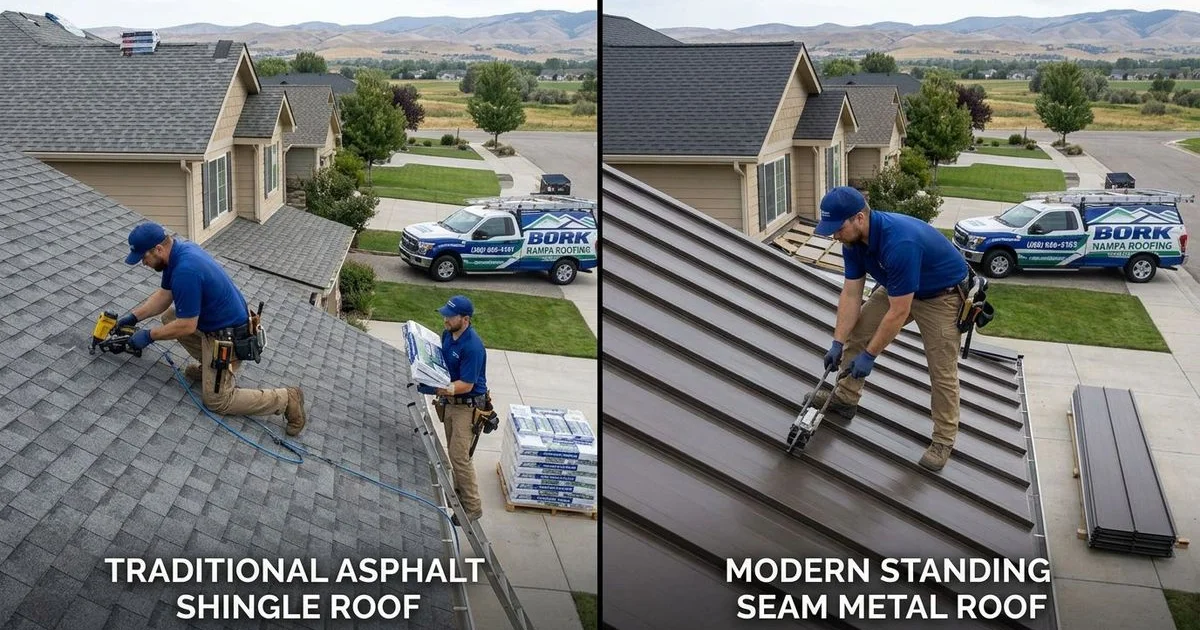
Both materials work well for Idaho homes. They simply serve different priorities. Asphalt shingles win on upfront affordability and ease of repair. Metal roofing takes the lead on longevity and lifetime value.
This guide breaks down the data and practical differences so you can make the right call for your property.
Cost Comparison
The price difference is usually the deciding factor for most families. We find that looking at the numbers side-by-side helps clarify the investment.
2026 Estimated Costs for a 2,500 Sq. Ft. Roof:
| Cost Factor | Asphalt Shingles (Architectural) | Metal Roofing (Standing Seam) |
|---|---|---|
| Price Per Square Foot | $3.50 - $8.75 | $12.50 - $18.00 |
| Total Installation | $15,500 - $19,500 | $31,250 - $45,000+ |
| Expected Lifespan | 20 - 25 Years | 40 - 70 Years |
| Avg. Cost Per Year | ~$700 | ~$650 |
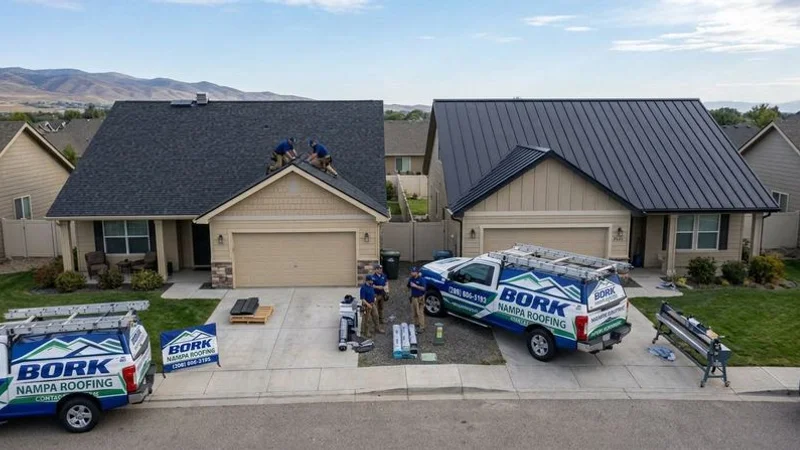
Metal roofing typically costs two to three times more upfront than asphalt. The long-term math changes when you look at the cost of ownership over 50 years. A homeowner will likely pay for two or three asphalt roof replacements in the time it takes to wear out one metal roof.
Lifespan and Durability
Metal roofing offers superior longevity that justifies its higher price tag.
Asphalt Shingles:
- 3-tab: 15 to 20 years (rapidly becoming obsolete).
- Architectural: 20 to 25 years depending on attic ventilation.
- Premium/Designer: 30 to 40 years with proper maintenance.
Metal Roofing:
- Standing Seam: 40 to 70 years.
- Metal Shingles: 30 to 50 years.
- Corrugated Metal: 25 to 40 years.
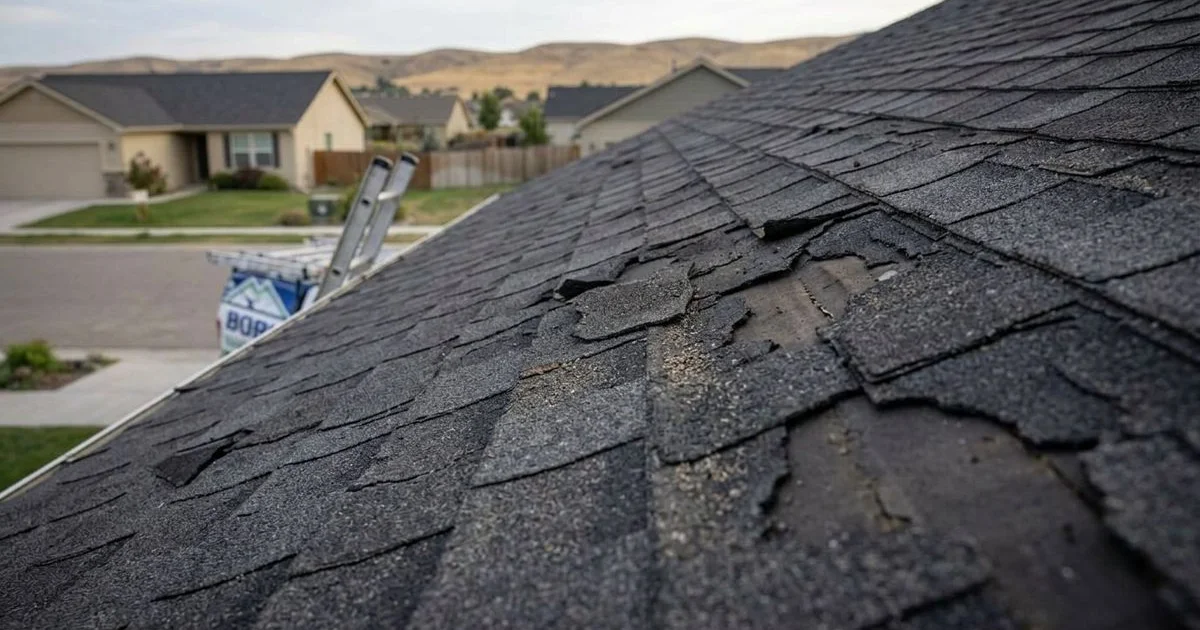
We frequently replace asphalt roofs installed in the early 2000s that have already failed. Heat and thermal cycling break down the petroleum-based granules. Metal systems installed correctly often outlast the homeowner’s time in the house.
The “Thermal Shock” Factor
Idaho weather is brutal on roofing materials due to rapid temperature swings. We experienced this intensely during the July 2024 heat wave where Boise hit temperatures over 100°F for nine consecutive days. Standard asphalt shingles expand and contract violently in these conditions. This daily movement causes the granules to pop off and the matting to crack over time.
Rubberized asphalt options handle this stress better. Brands like Malarkey use a polymer-modified asphalt (NEX technology) that remains flexible even during our freezing winters and scorching summers. This flexibility prevents the premature cracking we see in standard “builder-grade” shingles.
Performance in Idaho Weather
Idaho’s climate is tough on building materials. We experience temperature swings from 105°F in July to below zero in January. This expansion and contraction cycle is the primary enemy of any roof in the Treasure Valley.
Snow and Ice Management
Metal roofing sheds snow efficiently due to its smooth surface. Gravity clears the roof quickly. This reduces the weight load on your trusses and minimizes the risk of ice dams forming at the eaves. We strongly recommend installing snow guards on metal roofs over doorways and walkways to prevent dangerous, sudden slides.
Asphalt shingles hold snow in place due to friction. This extra friction is generally safer for pedestrians below but increases the chance of ice dams if your attic insulation is lacking.
Hail Resistance
Hail is a reality in Canyon and Ada counties. We have seen storms drop golf-ball-sized hail that wrecks standard roofs.
- Asphalt: Shingles absorb impact. Large hail can bruise the matting or knock off granules, leading to premature aging.
- Metal: Metal panels may dent, but they rarely puncture or leak.
Insurance providers often offer significant discounts for Class 4 Impact Resistant roofing. This rating is common for metal roofs and available on premium asphalt shingles.
Insider Tip for Insurance Discounts: Many insurance companies like State Farm or USAA offer premiums discounts of 10% to 30% for Class 4 roofs. There is a catch for metal roofs often called a “Cosmetic Waiver.” You may need to sign a waiver stating you will not file a claim for cosmetic dents that do not cause leaks. Verify this with your agent before installation so you understand the trade-off.
Heat and UV Exposure
Metal roofing reflects solar radiation. A quality metal roof with Cool Roof technology can reflect up to 85 percent of the sun’s energy. This keeps the roof surface and your attic much cooler.
Asphalt shingles absorb heat. A black shingle roof can reach temperatures over 150°F on a summer day in Nampa. This heat radiates into your attic and forces your air conditioner to work harder.
Wind Resistance
Treasure Valley windstorms can gust over 50 mph. We inspect roofs after these events and consistently see the difference in materials.
- Standing Seam Metal: Rated for 140 mph winds or higher. The mechanical locking system makes it nearly impossible for wind to lift a panel.
- Asphalt Shingles: Rated for 110 to 130 mph. Older shingles with brittle sealant strips are prone to tearing off during spring storms.
Recent storms have proven this point. The thunderstorm that rolled through the Treasure Valley on July 9, 2025 produced gusts up to 65 mph. We saw numerous asphalt shingles on older roofs unzip and blow into neighbors’ yards. Metal roofs in the same neighborhoods largely remained untouched because the panels are mechanically seamed together rather than just glued.
Energy Efficiency
Metal roofing is the clear winner for reducing utility bills. Its high solar reflectance and thermal emittance allow it to release absorbed heat quickly.
The Financial Impact:
- Cooling Costs: Metal roofs can reduce cooling energy use by 10 to 25 percent.
- Attic Temperature: A reflective roof can lower peak attic temperatures by up to 50°F.
Asphalt shingles have improved with “cool” granules that reflect more sunlight than older versions. They still hold more heat mass than metal. We advise homeowners who choose asphalt to focus heavily on attic ventilation to compensate for this heat absorption.
Federal Tax Credits: You can save money on installation too. The Energy Efficient Home Improvement Credit (25C) currently offers a tax credit of 30% of the cost (up to $600) for “cool roofs” that meet ENERGY STAR requirements. This applies to both specific metal colors and certain reflective asphalt shingles.
Maintenance Requirements
Every roof requires some level of attention. We suggest specific maintenance routines based on the material you choose.
Asphalt Shingle Maintenance:
- Moss Control: Zinc strips or chemical treatments are needed in shaded areas to prevent growth.
- Debris Removal: Pine needles and leaves trap moisture and rot shingles.
- Sealant Checks: Pipe boots and flashings need inspection every 3 to 5 years.
Metal Roof Maintenance:
- Fastener Tightening: Exposed fastener systems (screw-down roofs) need tightening every 10 to 15 years as washers degrade.
- Surface Cleaning: A simple rinse with a hose keeps the finish looking new.
- Snow Guard Checks: Ensure guards are secure before winter arrives.
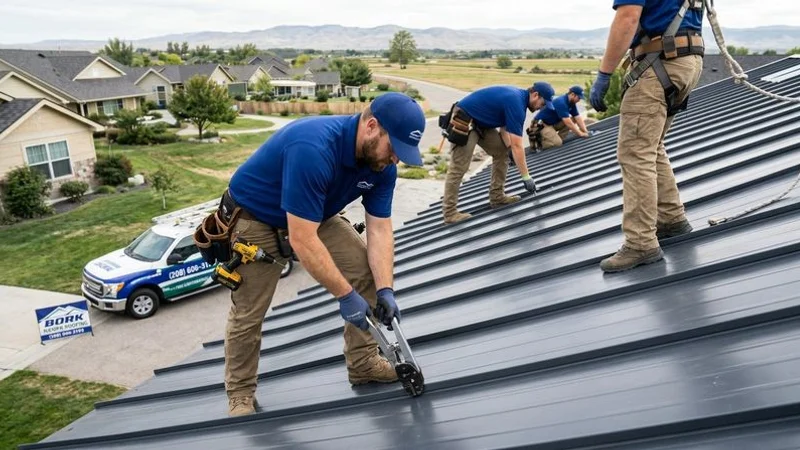
Metal roofing requires significantly less active maintenance. The primary risk with metal is “oil canning,” which is a visual waviness in the panels that does not affect performance.
Pro-Tip to Avoid Oil Canning: You can minimize those wavy metal lines by choosing the right panel profile. We recommend panels with “striations” (small ridges) or a matte finish rather than a high-gloss flat panel. These features stiffen the metal and hide thermal movement much better than smooth panels.
Curb Appeal and Resale Value
Appearance is subjective, but market value is data-driven. We find that specific architectural styles dictate the best choice.
- Asphalt: Offers a classic, warm look. It suits traditional suburban homes, Craftsmans, and Colonials.
- Metal: Provides a crisp, modern aesthetic. It looks incredible on farmhouses, mid-century modern homes, and barndominiums.
Remodeling Magazine’s Cost vs. Value Report typically shows that metal roofs recover a high percentage of their cost at resale. Buyers in Idaho appreciate the “set it and forget it” nature of a metal roof. A new asphalt roof is expected; a metal roof is a feature.
Which Should You Choose?
Making the final call comes down to your future plans.
Choose asphalt shingles if:
- Your upfront budget is limited.
- You plan to move within the next 10 to 15 years.
- You have a complex roofline where metal labor costs would be prohibitive.
- You are in an HOA that strictly prohibits metal roofing.
Choose metal roofing if:
- You want this to be the last roof you ever buy.
- You are focused on energy efficiency and eco-friendly materials.
- You love the modern farmhouse or industrial aesthetic.
- You want the best possible protection against wind and hail.
There is no wrong answer between these two materials. The right choice depends on your financial goals and your vision for the home.
Get a Free Side-by-Side Estimate
At Bork Nampa Roofing Contractors, we install both asphalt shingles and metal roofing systems. We believe in giving you the data you need to make an educated choice without the sales pressure.
Our team is happy to provide a side-by-side estimate so you can compare the actual costs for your specific layout. As a GAF Certified and Owens Corning Preferred Contractor, we back every project with industry-leading warranties.
Call us at (208) 606-3193 or request your free estimate online to explore your options.

Bork Roofing Team
Licensed Roofing Contractor
Licensed roofing contractors serving Nampa and the Treasure Valley.