The roof overhead represents one of the single largest capital assets for any facility in the Treasure Valley.
We know that for property managers, that asset is also a source of constant low-level anxiety.
A full replacement now costs significantly more than it did just three years ago.
Current market data for 2026 puts commercial replacement costs between $8 and $14 per square foot for standard TPO or PVC systems in our region.
Premium metal options push that figure much higher.
For a standard 20,000-square-foot warehouse in Nampa or Boise, you are looking at a capital expenditure of $160,000 to $280,000.
Our team sees too many local roofs fail prematurely simply because minor issues were ignored.
A proactive maintenance program does more than just patch leaks.
It extends your roof’s service life by 10 to 15 years and prevents the “thermal shock” damage common in our high-desert climate.
This guide details the specific strategies Idaho property managers need to protect their assets.
Why Commercial Roof Maintenance Cannot Be an Afterthought
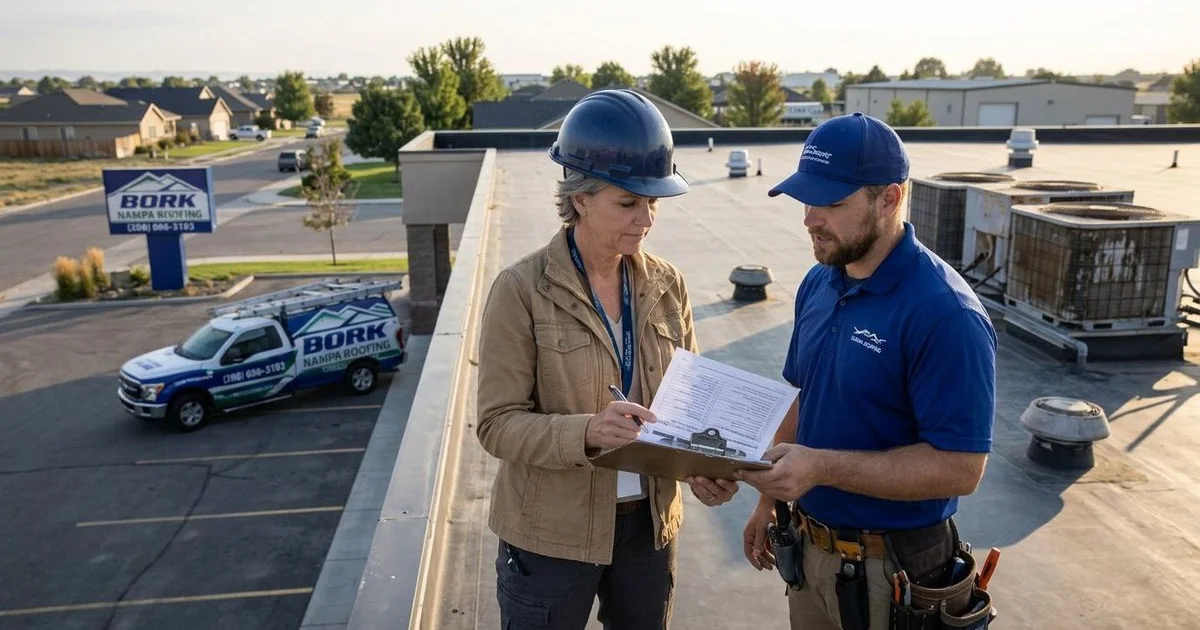
Ignoring a commercial roof until water drips on a tenant’s desk is a financial gamble you will likely lose.
We find that reactive repairs cost an average of $0.45 per square foot annually, compared to just $0.14 per square foot for proactive maintenance.
Insurance policies create another layer of urgency.
Most commercial property policies now include “neglect” clauses.
These clauses state that damage resulting from a lack of maintenance is not covered.
Our technicians have seen claims denied because the owner could not produce a log of annual inspections.
You need a documented history of care to protect your coverage.
The International Building Code (IBC) also mandates specific upkeep to maintain the fire rating of your roofing assembly.
A neglected roof that collects debris is not just a leak risk.
It becomes a fire hazard during our dry Idaho summers.
Recommended Inspection Schedule
Commercial roofs require a strict inspection rhythm to handle the specific weather patterns of the Treasure Valley.
Waiting until you see a water stain on a ceiling tile often means the insulation and decking above are already compromised.
We recommend this specific schedule for Idaho commercial buildings:
Twice a year (Spring and Fall):
- Spring (Post-Thaw): Schedule this in late March or early April. You must inspect for membrane separation caused by freeze-thaw cycles. Also, clear drains of the cottonwood seeds that blanket Boise every June.
- Fall (Pre-Snow): Aim for late October. Remove tumbleweeds and leaves that have accumulated in scuppers to prevent ice dams during winter.
- Documentation: Log every defect with time-stamped photos. This creates the paper trail required for warranty compliance.
After every major weather event:
- Wind Events: Check perimeter flashings and corners if gusts exceed 50 mph. These areas experience the highest uplift forces during our frequent spring windstorms.
- Heavy Snow: Inspect for signs of deflection or sagging beams after significant accumulation.
- Hail: Look for “bruising” on single-ply membranes or dents in metal flashings.
Annually:
- Moisture Detection: Perform a non-destructive infrared scan. This technology identifies wet insulation that isn’t visible to the naked eye.
- Code Compliance: Review current Idaho Energy Conservation Code requirements. Zone 5B/6B currently requires R-30ci (continuous insulation) above the deck for new roofs.
- Asset Update: Adjust your capital budget based on the roof’s remaining useful life.
Common Commercial Roof Problems in Idaho
Idaho’s climate creates unique stressors for roofing materials.
The surface temperature of a black roof can reach 160°F in July and drop to 60°F at night.
This 100-degree swing causes rapid expansion and contraction known as thermal shock.
Membrane Shrinkage and Splitting
Single-ply membranes like TPO and EPDM are prone to shrinking over time.
This is especially true when they are exposed to the intense UV radiation we experience during Idaho summers.
The membrane eventually pulls away from parapet walls and flashings.
Technicians call this “bridging.”
It creates tension that snaps seams or tears the material.
Once the membrane is taut like a drum skin, a simple hail impact can shatter it.
Flashing Failures
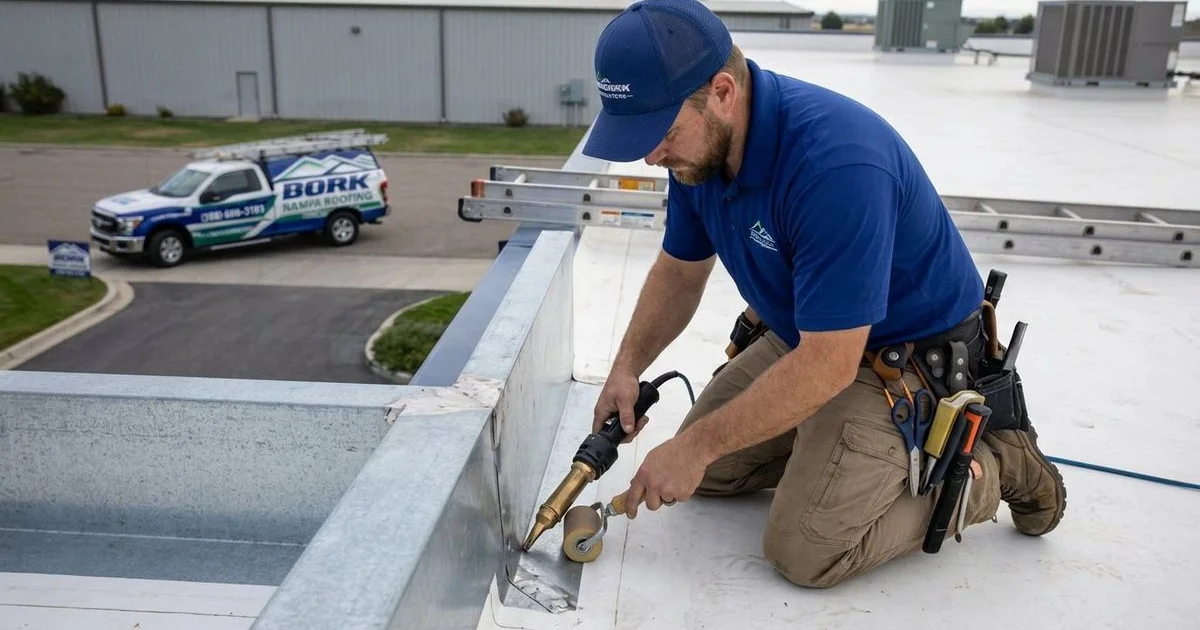
Flashings at walls, curbs, and penetrations are the weakest points on any roof.
In our region, the differential movement between the metal flashing and the roof membrane often causes sealants to crack.
Our technicians frequently find that the caulk or sealant at these termination points has dried out and split.
Standard silicone sealants often fail under these conditions.
We suggest checking “pitch pans” (the metal boxes around pipes) specifically, as the filler material often shrinks and cracks after a cold winter.
Ponding Water
Flat roofs are rarely perfectly flat, but water should not sit for long periods.
Ponding is defined by the National Roofing Contractors Association (NRCA) as water that remains on the roof surface for more than 48 hours after rainfall.
This is a structural risk as well as a waterproofing issue.
Standing water weighs approximately 5.2 pounds per square foot per inch of depth.
This added weight can cause deck deflection.
The deflection creates deeper bowls for more water to collect, leading to a progressive collapse risk.
Punctures and Mechanical Damage
Roof traffic is a leading cause of leaks.
HVAC technicians, sign installers, and other tradespeople often drop tools or drag heavy equipment across the membrane.
Small punctures from screws or dropped panels allow water to saturate the insulation below.
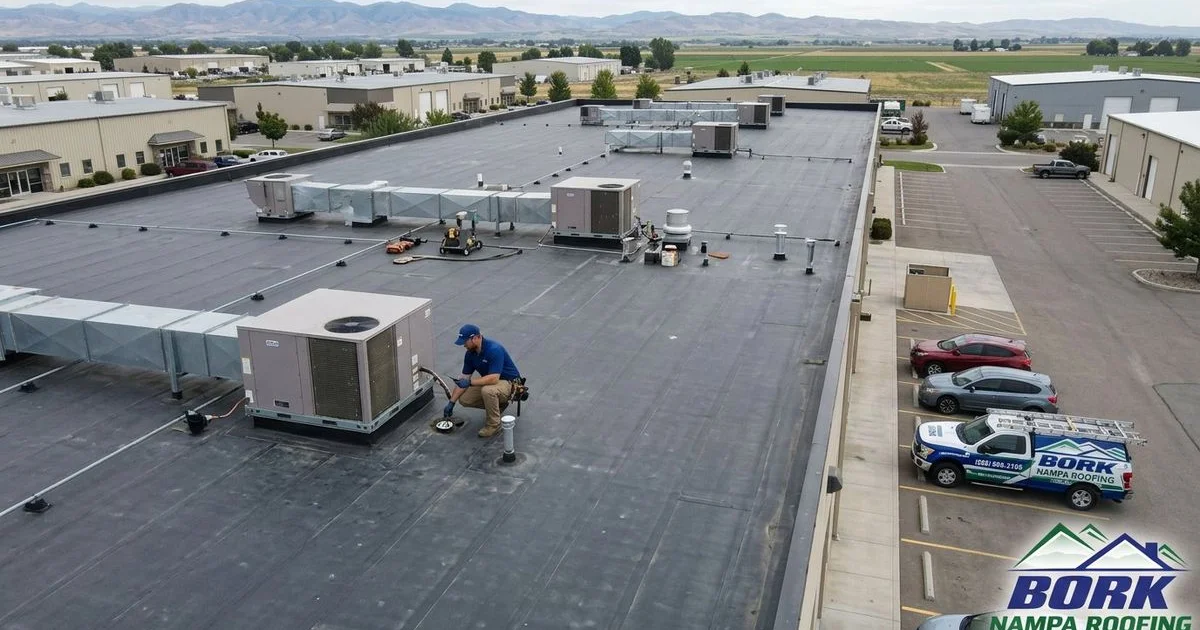
We strongly advise installing “yellow spaghetti” walk pads around all mechanical units.
These distinct paths define a safe working zone for service workers and protect the membrane.
Blow-Offs and Wind Damage
The Treasure Valley is known for high-wind events, particularly in the spring.
Improperly adhered membranes can lift.
This creates a billowing effect that pulls fasteners out of the deck.
Perimeter edges and corners are the most vulnerable zones.
If the metal edge flashing (coping) is loose, the wind can get underneath the membrane and peel it back.
ANSI/SPRI ES-1 is the testing standard for edge metal.
Ensuring your edge metal meets this standard is your first line of defense against blow-offs.
Building Your Maintenance Program
An effective program requires organization and consistency.
Here is a framework property managers in Nampa and Boise can use to systematize their roof care.
Step 1: Create a Digital Roof File
Paper files get lost.
We recommend a specific cloud-based folder (like Dropbox or Google Drive) accessible to your facilities team.
This “Roof Passport” should contain:
- Warranty Documents: The specific terms, expiration dates, and manufacturer contact info.
- As-Built Drawings: Plans showing the location of drains, gas lines, and insulation thickness.
- Service Logs: Dates of all inspections, repairs, and modifications.
- Baseline Photos: High-resolution images of the roof in good condition for comparison.
Step 2: Establish Access Protocols
Uncontrolled access leads to avoidable damage.
You can protect your roof by enforcing these rules:
- Logbook: Keep a physical log at the roof hatch. Require every contractor to sign in and out.
- Debris Removal: Mandate that contractors remove all their own trash. This includes screws, wire clippings, and empty sealant tubes.
- Shoe Policy: Prohibit heavy lug-soled boots. These treads trap gravel and grind it into the membrane like sandpaper.
Step 3: Maintain Drainage Systems
Clogged drains are the enemy of a flat roof.
In Idaho, tumbleweeds and wind-blown trash frequently block scuppers.
Your team should clean all drains and strainers at least quarterly.
During the fall, increase this frequency to monthly.
You must ensure the system is clear before the first hard freeze hits in November.
Step 4: Address Repairs Promptly
Small leaks can destroy the thermal efficiency of your building.
Once water saturates the insulation, that material loses its R-value and often cannot be dried out.
We operate by the “wet insulation rule.”
If moisture travels extensively under the membrane, you are no longer doing a patch repair.
You are facing a partial replacement.
Address punctures and separated seams within 30 days to keep repairs minor.
Step 5: Plan for the Long Term
Different materials age differently in our climate.
Use this comparison to benchmark your current roof’s performance and plan for future replacements.
| Roof System | Estimated Lifespan (Idaho) | Best For |
|---|---|---|
| TPO | 20-25 Years | Energy Efficiency. The white surface reflects UV rays. This lowers cooling costs in summer. |
| EPDM | 25-30 Years | Durability. The rubber membrane handles hail and thermal shock extremely well. |
| Metal | 40-60 Years | Longevity. Highest upfront cost but lowest long-term maintenance. |
| Mod-Bit | 15-20 Years | Traffic Resistance. Multi-layer systems are tough. However, they can become brittle in extreme cold. |
Start budgeting for a replacement when your roof reaches 75% of its expected lifespan.
This prevents the financial shock of an emergency replacement.
The Cost of Neglect vs. Maintenance
Property managers often ask if the annual cost of inspections is justified.
The financial data makes a compelling case for proactive care.
- Maintenance Cost: Approximately $0.15 to $0.30 per square foot annually for a professional program.
- Emergency Repairs: These typically cost 3 to 5 times more than scheduled repairs due to urgency and severity.
- Premature Failure: Replacing a roof at year 15 instead of year 25 results in a massive loss of capital value.
The math is simple for a 20,000-square-foot building.
Spending roughly $3,000 to $6,000 a year on maintenance can defer a $200,000 capital expense for a decade.
That is a return on investment that few other building upgrades can match.
Partner with a Commercial Roofing Specialist
Managing a commercial roof requires specialized knowledge and safety equipment.
You need a partner who understands the local code requirements and the specific challenges of Idaho weather.
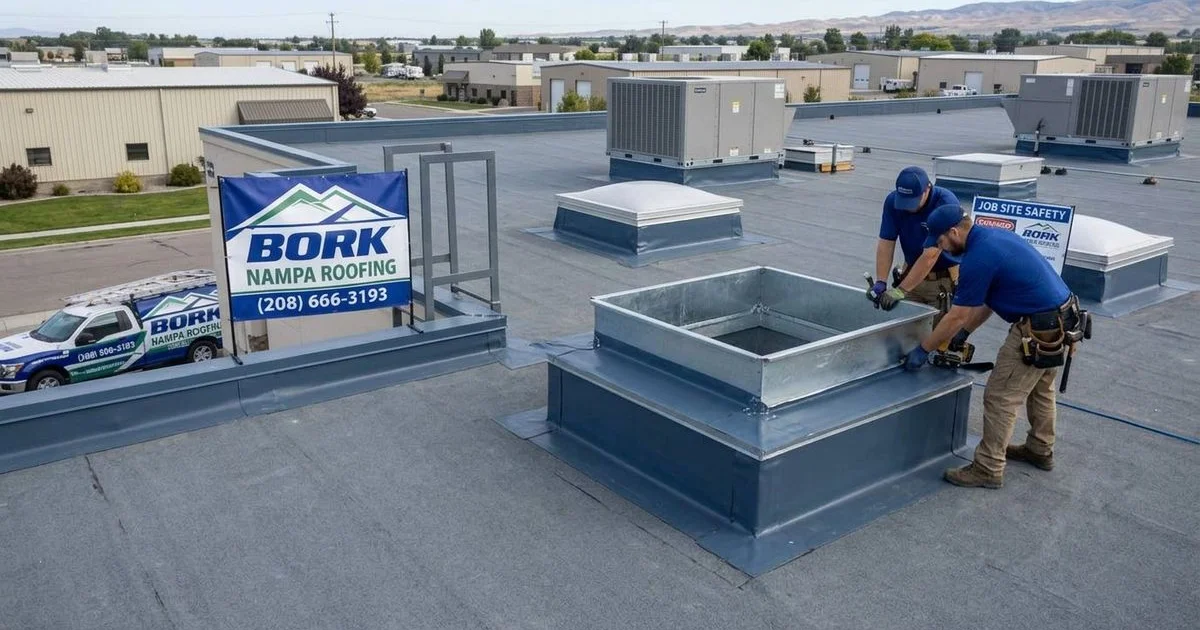
Bork Nampa Roofing Contractors provides comprehensive maintenance plans for clients across Nampa, Meridian, and the entire Treasure Valley.
We specialize in TPO, EPDM, and metal systems.
Our team offers detailed reporting that helps you make data-driven decisions about your property.
Call (208) 606-3193 for a free estimate on a commercial roof maintenance program for your property.

Bork Roofing Team
Licensed Roofing Contractor
Licensed roofing contractors serving Nampa and the Treasure Valley.