The Most Common Question We Hear
You probably don’t think about your roof until water drips onto your living room floor.
Most Nampa homeowners we talk to admit they only look up when something goes wrong.
We understand why that happens, but waiting for a leak usually means the damage is already expensive.
The answer to “how often should I inspect” seems like it should be simple.
Realistically, the right schedule depends on your roof’s age, the material it is made from, and the specific weather patterns here in the Treasure Valley.
We stick to a clear baseline recommendation that applies to nearly every home in our region.
Get your roof professionally inspected at least twice a year.
Spring and fall are the non-negotiable times to do this.
Your specific situation might require even more attention depending on recent storms or the age of your shingles.
The Baseline: Two Inspections Per Year
We follow the guidelines set by the National Roofing Contractors Association (NRCA) regarding inspection frequency.
For a roof in reasonable condition that is less than 15 years old, two professional inspections per year provide solid preventive coverage.
This timing isn’t arbitrary.
It aligns perfectly with Idaho’s aggressive seasonal transitions.
Spring Inspection (March through May)
Idaho winters are tough on structural materials.
A spring inspection assesses damage from heavy snow loads, ice accumulation, and the freeze-thaw cycling that expands small cracks.
We look for cracked shingles, damaged flashing, and the aftereffects of ice dams during this window.
Catching these issues before spring rains arrive prevents water from infiltrating the sub-layers of your roof.
Fall Inspection (September through November)
We need to confirm your roof is ready for months of cold temperatures before winter sets in.
This inspection focuses on ensuring gutters are clear, ventilation is functioning, and flashing is sealed tight against snow intrusion.
Any damage caused by summer heat or UV exposure must be addressed now.
These two inspections create a proactive rhythm.
Most roofing problems are progressive.
They start as minor issues, like a loose piece of flashing, and worsen over time into major leaks.
Fixing a small seal failure costs a fraction of what you will pay for structural repair after a season of neglect.
When You Need More Frequent Inspections
Standard maintenance works for most homes, but specific variables change the math.
We adjust our recommendations based on three critical factors.
After Major Storms
The Treasure Valley experiences severe weather that can compromise a roof in minutes.
We advise scheduling a checkup immediately after any significant weather event.
- Hailstorms: Stones as small as a quarter can bruise shingles and dislodge the protective granules.
- High Winds: Gusts over 50 mph can lift shingle edges and break the adhesive seals that keep water out.
- Heavy Snowfall: Structural stress from weight and ice dams can occur during partial melts.
- Ice Storms: Freezing rain works its way beneath shingles and into vulnerable areas around flashings.
Do not assume your roof is fine just because you don’t see shingles on the ground.
Many expensive failures start as “invisible” storm damage that homeowners can’t see from the driveway.
When Your Roof Is Over 15 Years Old
Roofing materials have a predictable lifecycle.
We see a significant uptick in failure rates once asphalt shingles pass the 15-year mark.
A roof between 15 and 20 years old deserves closer attention during each inspection.
Our inspectors pay special attention to granule loss, curling, and the condition of the underlayment during these later years.
Once a roof passes the 20-year mark, adding a mid-summer inspection is a smart investment.
Older materials become brittle and can develop problems quickly during Idaho’s hot summers when thermal cycling stresses the aging asphalt.
When You Notice Warning Signs
You shouldn’t wait for the calendar to turn if you spot red flags.
We recommend calling a professional immediately if you observe any of the following:
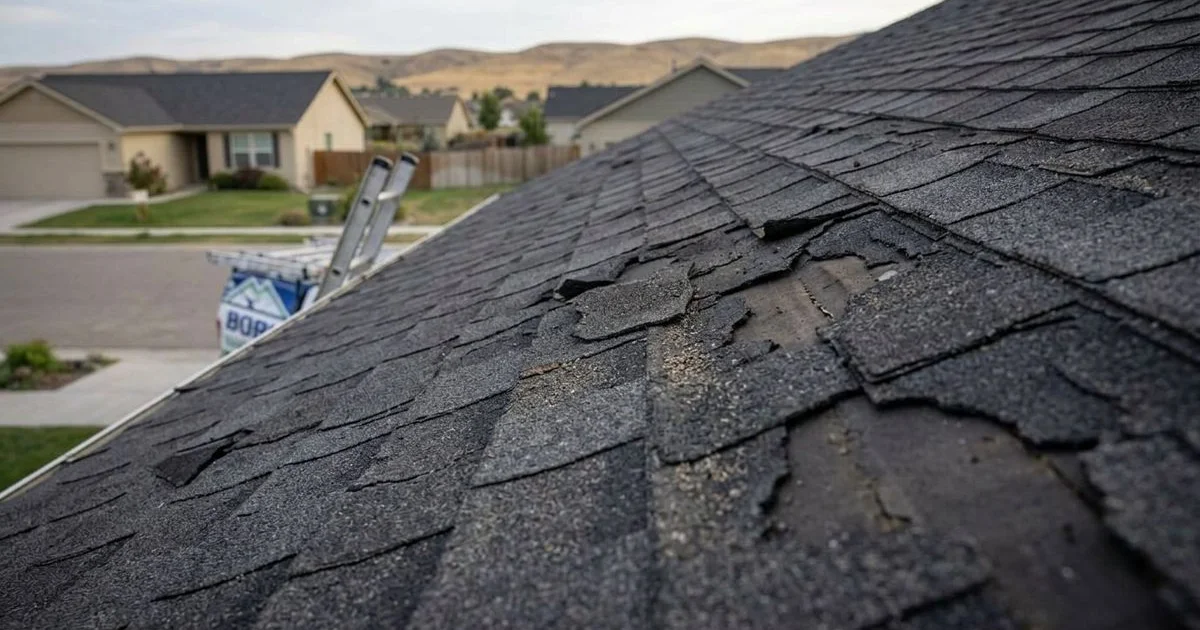
- Shingles that are missing, cracked, or visibly curled at the edges.
- Excessive granule buildup in your gutters (it looks like black sand).
- Water stains appearing on ceilings or walls inside your home.
- Daylight visible through the roof deck when you look up from the attic.
- Moss or algae growth, specifically Gloeocapsa magma, which appears as dark black streaks.
- Flashing that has separated from chimneys, walls, or vents.
- Energy bills climbing without an obvious explanation, indicating insulation or ventilation failure.
Any of these signs warrants a professional inspection right away.
How Roof Material Affects Inspection Frequency
Different materials age differently.
We use the following framework to determine the right schedule for your specific roof type.
| Material Type | Typical Lifespan | Inspection Frequency | Primary Vulnerability |
|---|---|---|---|
| Asphalt Shingles | 20-25 Years | 2x Yearly | Granule loss, cracking, and wind lift. |
| Metal Roofing | 40-70 Years | 1-2x Yearly | Loose fasteners, washer degradation, and panel movement. |
| Flat/Commercial | 20-30 Years | 2x Yearly + Storms | Ponding water, seam separation, and membrane punctures. |
| Wood Shake | 25-30 Years | 2x Yearly | Rot, mold, splitting, and moss growth. |
Asphalt Shingles: Since this is the most common material in Nampa, we monitor it closely for UV degradation. Metal Roofing: While durable, the expansion and contraction from temperature swings can loosen screws over time. Flat Roofs: These require the most vigilance regarding drainage, as standing water can destroy the membrane within days.
What Inspectors Actually Look For
A casual glance from a ladder isn’t enough.
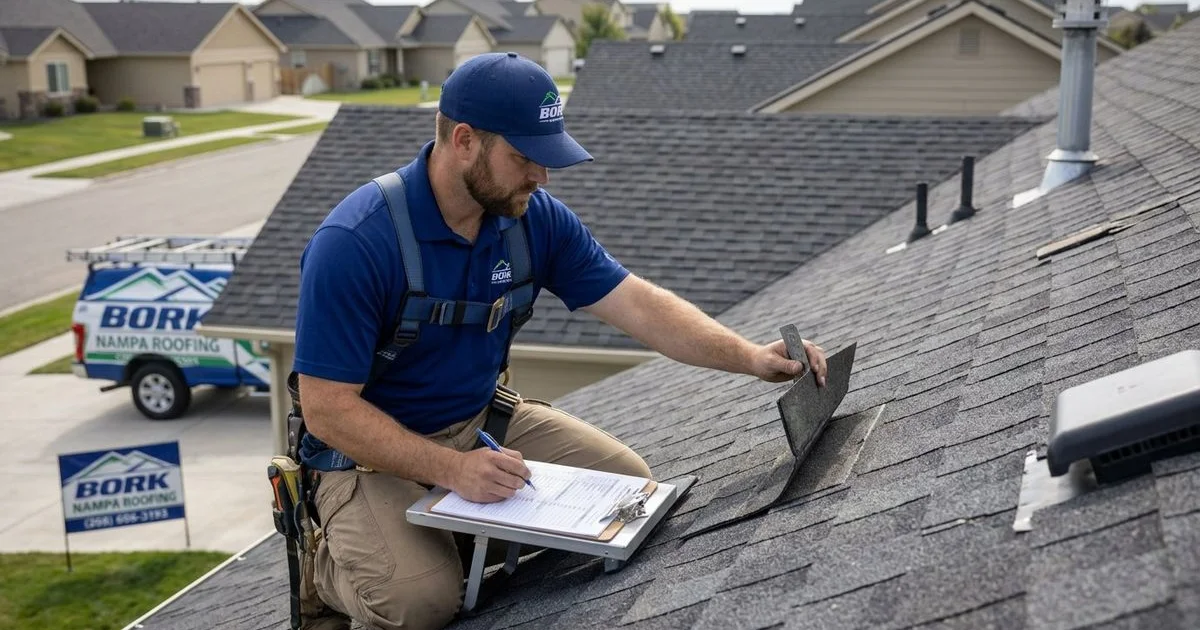
A thorough professional roof inspection involves a systematic evaluation of your home’s entire envelope.
We utilize tools like moisture meters and sometimes infrared thermography to see what the naked eye cannot.
On the Exterior
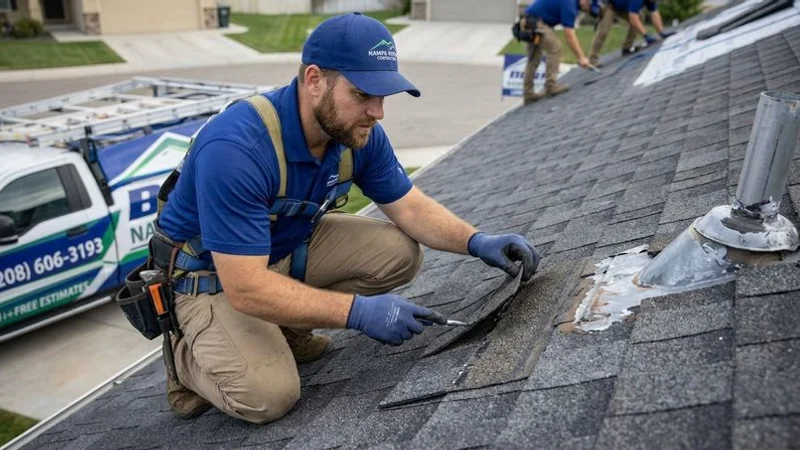
We physically walk the roof (when safe) to test the integrity of the system.
- Material Condition: Checking for brittleness, blistering, and adhesion.
- Flashing Integrity: inspecting every penetration, wall junction, and valley for rust or separation.
- Ridge Caps: Verifying these high-stress points are secure.
- Gutter Attachment: Ensuring downspouts are diverting water at least 5 feet away from the foundation.
- Ventilation Points: Checking soffits and ridge vents for blockage.
Inside the Attic
The underside of the roof deck tells us the real story.
We check insulation depth to ensure it meets current R-value standards for our climate region.
- Ventilation Adequacy: verifying intake and exhaust balance to prevent heat buildup.
- Moisture Detection: Searching for condensation, rusted nails, or black mold on the sheeting.
- Structural Health: inspecting rafters and trusses for sagging or water damage.
- Leak Evidence: Tracing old water trails to their source.
Documentation Provided
You deserve proof of what we find.
We provide a detailed report that includes:
- High-resolution photographs of problem areas.
- A prioritized list of findings (immediate vs. monitor).
- Estimated remaining useful life of the roof system.
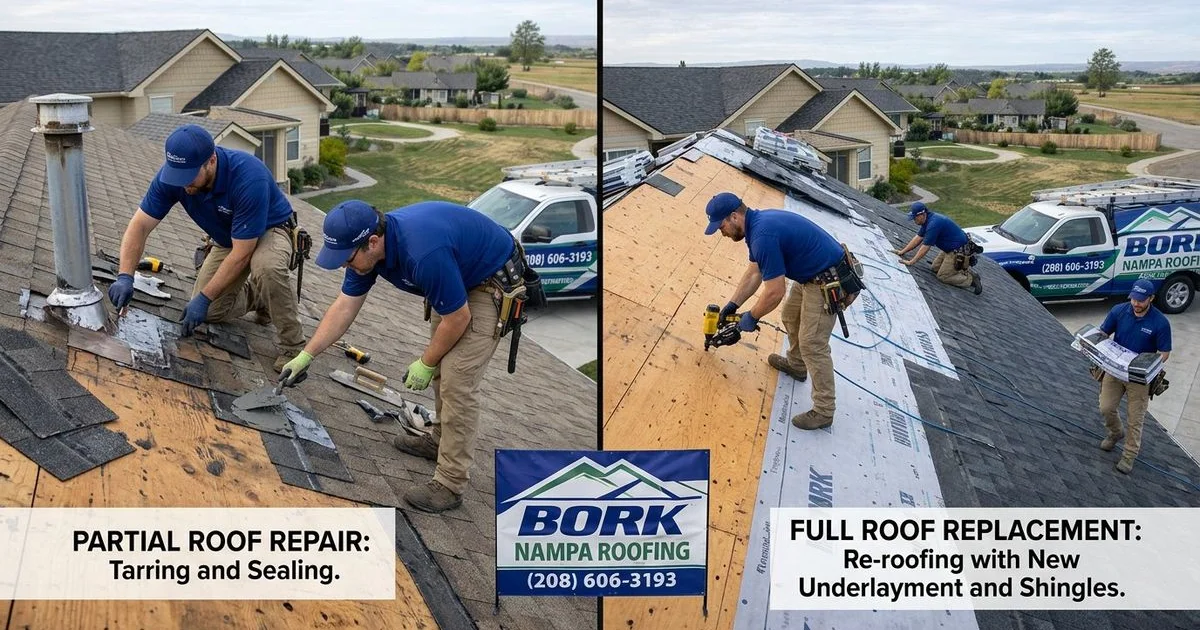
- Recommendations for repair or replacement.
Idaho Climate: Why Inspections Matter More Here
The Treasure Valley presents a unique challenge for building materials.
We deal with four distinct seasons that each attack your roof in a different way.
Winter brings freeze-thaw cycles. Water seeps into tiny cracks during the day, freezes at night, and expands, forcing the crack open wider. Idaho can see over 100 of these cycles in a single season.
Spring introduces high winds and rapid temperature swings. These fluctuations test the elasticity of your shingles and sealants.
Summer is brutal on asphalt. Intense UV radiation dries out the oils in shingles, making them brittle and prone to cracking.
Fall brings debris. Leaves and pine needles clog gutters, which leads to ice dams once the temperature drops.
A roof in a mild climate like San Diego might handle an annual check. A roof in Nampa dealing with these extremes needs the twice-yearly minimum to survive its full lifespan.
Simple Checks You Can Do Between Inspections
You are the first line of defense for your home.
We encourage homeowners to perform “ground-level” audits between our visits.
Safety is the priority here. According to the CDC, over 500,000 people are treated for ladder-related injuries annually. Stay on the ground and use binoculars or your phone’s camera zoom.
- Scan the Roofline: Look for any unevenness or sagging along the ridge.
- Check the Gutters: Look for piles of granules at the bottom of downspouts after rain.
- Monitor the Attic: Pop your head in the attic with a strong flashlight after a heavy storm to check for glistening water.
- Watch Your Bills: A sudden spike in heating or cooling costs often points to a roof ventilation or insulation failure.
- Interior Scan: Inspect ceilings and corners for faint yellow rings or bubbling paint.
These quick checks take five minutes. They can alert you to problems that need professional attention before they cause structural rot.
The Cost of Skipping Inspections
Many people worry about the inspection fee.
We view the cost of inspection against the cost of the damages it prevents.
A professional inspection in the Nampa area typically runs between $150 and $350. Contrast that with the financial impact of reactive repairs.
- Minor Leak Repair: $400 to $1,500.
- Water Damage Restoration: $3,000 to $10,000+ if walls and floors are involved.
- Mold Remediation: $2,000 to $15,000.
- Premature Replacement: $12,000 to $30,000+ for a full system.
Two inspections a year is a modest expense. It protects one of the most valuable assets you own from depreciation and disaster.
Schedule Your Roof Inspection With Bork Roofing
Your roof protects everything you own.
Regular professional inspections are the most effective way to ensure it stays capable of doing that job.
Bork Nampa Roofing Contractors provides thorough, documented, and honest assessments for homeowners throughout the Treasure Valley. We tell you exactly what your roof needs. Sometimes that means a simple repair, and sometimes it means doing nothing at all.
Call us at (208) 606-3193 to schedule your roof inspection or contact us online. We serve Nampa, Meridian, Caldwell, Eagle, Star, and all surrounding communities.

Bork Roofing Team
Licensed Roofing Contractor
Licensed roofing contractors serving Nampa and the Treasure Valley.