Metal Roofing Myths That Refuse to Die
Metal roofing has evolved significantly from the corrugated tin panels you might remember on old barns. Today’s residential systems are engineered for high performance and designed to outlast traditional asphalt shingles by decades. Yet, we still encounter homeowners who hesitate because of outdated information.
If you have been considering a metal roof for your Nampa or Treasure Valley home but feel unsure, you are in the right place. We want to clear up the confusion surrounding the six most persistent myths we hear in the field.
Myth 1: Metal Roofs Are Incredibly Noisy When It Rains
You know the sound of rain hitting a tin shed? That specific, pinging noise is what most people imagine when they think of metal roofing. We hear this concern more than any other.
The reality is quite different for a residential home.
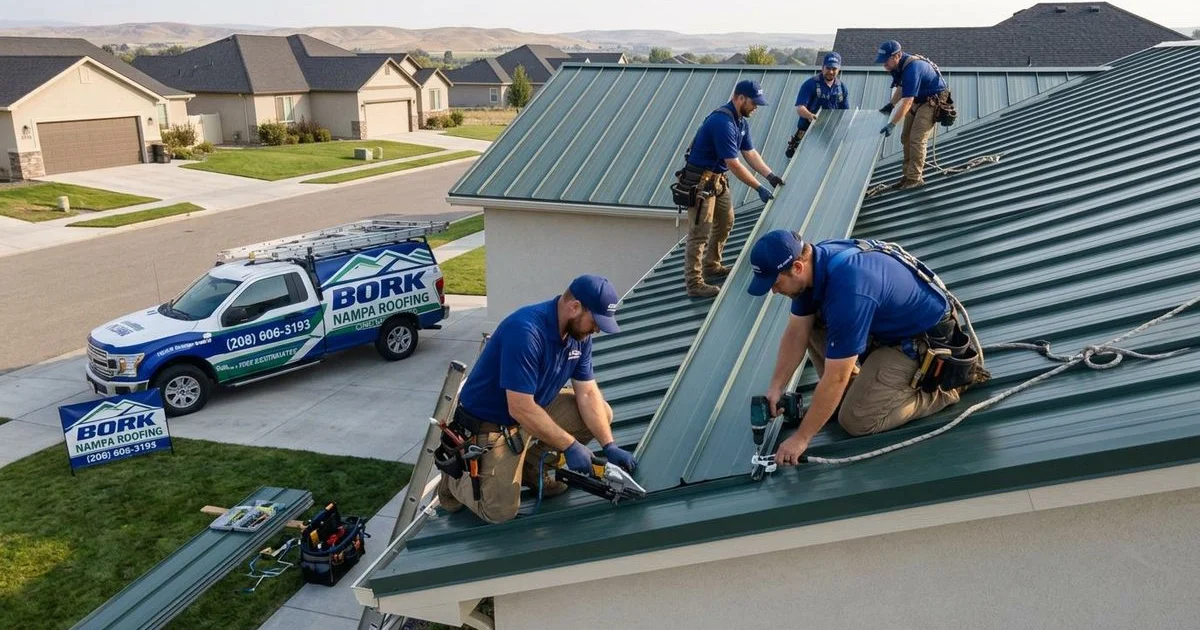
A modern metal roof is installed over a solid plywood or OSB roof deck, usually with a layer of felt or synthetic underlayment in between. These layers act as a sound barrier.
The Acoustic Reality
Sound intensity is measured in decibels (dB). In controlled acoustic studies, the difference between rain hitting a metal roof and a standard shingle roof is often undetectable to the human ear.
| Material Scenario | Estimated Noise Level (Rain) |
|---|---|
| Metal over open framing (Barn) | 70+ dB (Loud conversation) |
| Asphalt Shingles | 46 dB (Quiet library) |
| Metal over solid deck + insulation | 52 dB (Quiet refrigerator hum) |
If your home has a standard attic with insulation, the sound transfer is dampened even further. Most of our clients in Nampa report that they cannot tell the difference in sound levels after switching from asphalt to metal.
Myth 2: Metal Roofs Attract Lightning
This myth seems to make sense because metal conducts electricity. People assume a metal roof acts like a giant lightning rod.
Physics tells a different story.
Lightning seeks the path of least resistance to the ground and typically strikes the highest object in the area. Trees, utility poles, and chimneys are far more likely targets than your roof surface.
Why Metal is Actually Safer
If your home were struck by lightning, a metal roof is one of the safest materials you could have. It is non-combustible.
Consider these safety factors:
- Fire Resistance: Unlike wood shakes or asphalt, metal will not ignite from a lightning strike.
- Energy Dispersion: Metal conducts the electrical charge across the entire roof surface rather than concentrating it in one spot.
- Grounding: When properly grounded, the energy dissipates safely into the earth.
The National Fire Protection Association (NFPA) does not list metal roofing as a factor that increases the probability of a lightning strike.
Myth 3: Metal Roofs Rust Quickly
We understand why this worry exists. Decades ago, untreated steel panels would eventually succumb to rust.
Modern metallurgy has solved this problem.
Today’s residential metal roofing utilizes advanced protective layers designed to withstand the elements for 50 years or more.
The Defense System Against Corrosion
Manufacturers now use specific coatings to ensure longevity:
- Galvalume: This is a steel sheet coated with an alloy of 55% aluminum and 45% zinc. The aluminum prevents rust, while the zinc heals scratches (galvanic action).
- Kynar 500 / Hylar 5000: These are premium PVDF resin-based coatings. They are the industry gold standard for retaining color and resisting chalking or fading.
- Aluminum: For specific applications, we use aluminum panels which are naturally rust-proof.
Idaho’s climate works in your favor here. Our dry environment in the Treasure Valley is far less corrosive than coastal areas with salt spray.
Myth 4: Metal Roofs Are Too Heavy for Most Homes
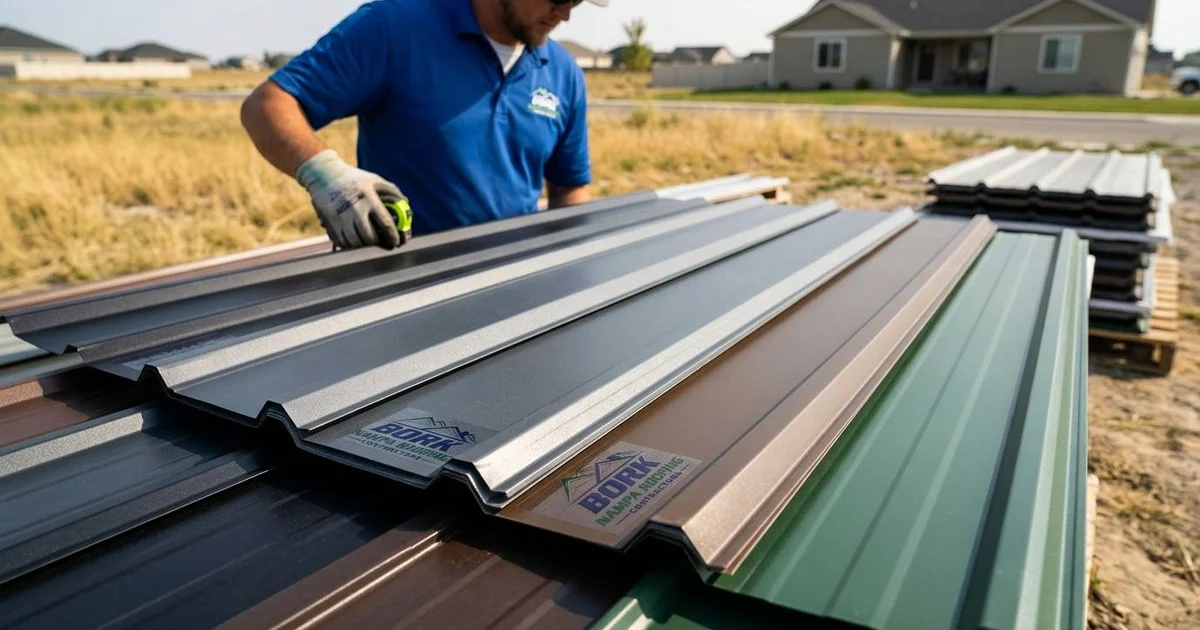
This is actually the opposite of the truth. Many homeowners are surprised to learn that metal is one of the lightest roofing materials you can buy.
We often recommend metal specifically for older homes where structural integrity is a concern.
Weight Comparison by Material
To give you a clear picture, here is how the weights stack up per “square” (a 10x10 foot area):
| Roofing Material | Weight Per 100 Sq. Ft. |
|---|---|
| Aluminum / Steel | 50 - 150 lbs |
| Asphalt Shingles | 200 - 400 lbs |
| Concrete Tile | 900 - 1200 lbs |
| Natural Slate | 1000 - 1500 lbs |
Metal roofing places the least amount of stress on your home’s framing.
This low weight profile is especially beneficial in Idaho winters. It leaves more structural capacity to handle heavy snow loads without risking a roof collapse.
Myth 5: Metal Roofs Dent Easily in Hailstorms
Hail is a reality in Idaho, so this is a valid question. The resistance of your roof depends entirely on the quality of the product you choose.
We install products that are rated for severe impact.
Most quality metal roofs carry a UL 2218 Class 4 Impact Rating. This is the highest impact rating available in the roofing industry.
What does Class 4 mean? To earn this rating, a roofing material must withstand a 2-inch steel ball dropped from 20 feet without cracking or splitting.
Cosmetic vs. Functional Damage
An unusually massive hailstorm might leave small cosmetic dents in a metal roof, but the roof remains watertight. The same storm would likely shatter asphalt shingles or crack clay tiles, leading to immediate leaks.
Many insurance companies recognize this durability. State Farm, Liberty Mutual, and others often offer premium discounts of up to 35% for homes with Class 4 impact-rated metal roofs.
Myth 6: Metal Roofs Make Your House Too Hot in Summer
It feels intuitive to think that metal heats up in the sun. If you touch a car hood in July, it burns.
Your roof functions differently thanks to specialized finishes.
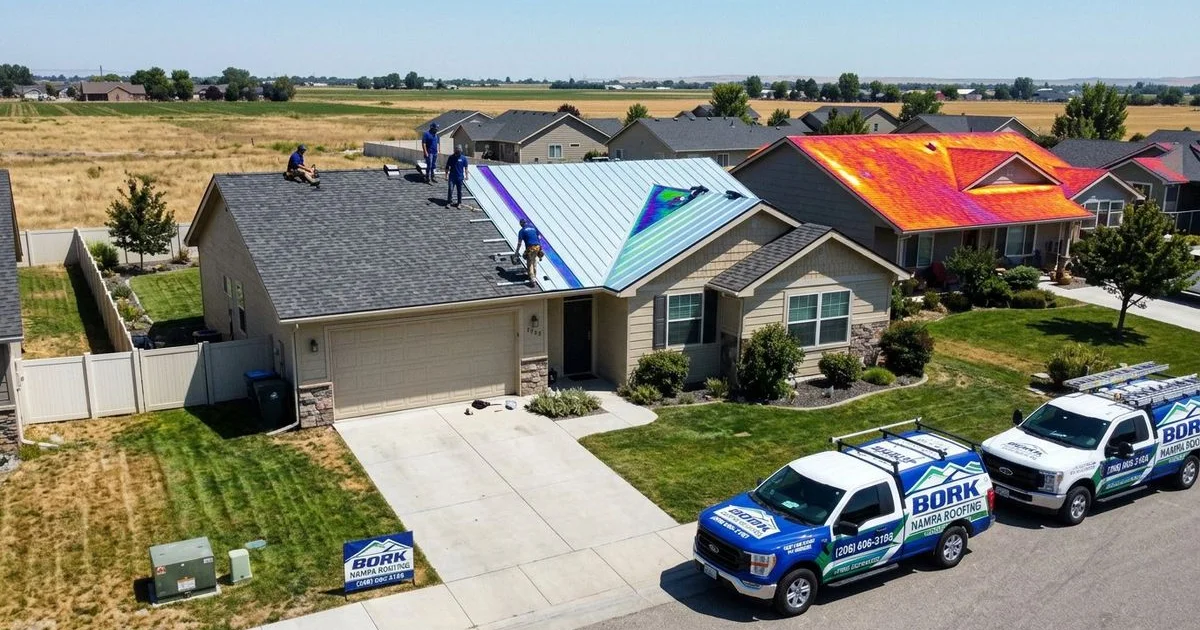
Modern metal roofs are “cool roofs.” They are coated with pigments that reflect solar energy rather than absorbing it.
The “Cool Roof” Effect
The Cool Roof Rating Council (CRRC) tests these materials for solar reflectance.
- Asphalt Shingles: Absorb heat and hold it. They continue radiating heat into your attic long after the sun goes down.
- Reflective Metal: Reflects up to 70% of solar radiation.
- Thermal Emittance: Metal releases absorbed heat quickly once the sun sets.
For Nampa homeowners facing 100-degree summer days, this translates to real savings. A reflective metal roof can lower your roof surface temperature by up to 50 degrees compared to asphalt.
This reduction typically lowers air conditioning costs by 15% to 25%.
The Bottom Line on Metal Roofing
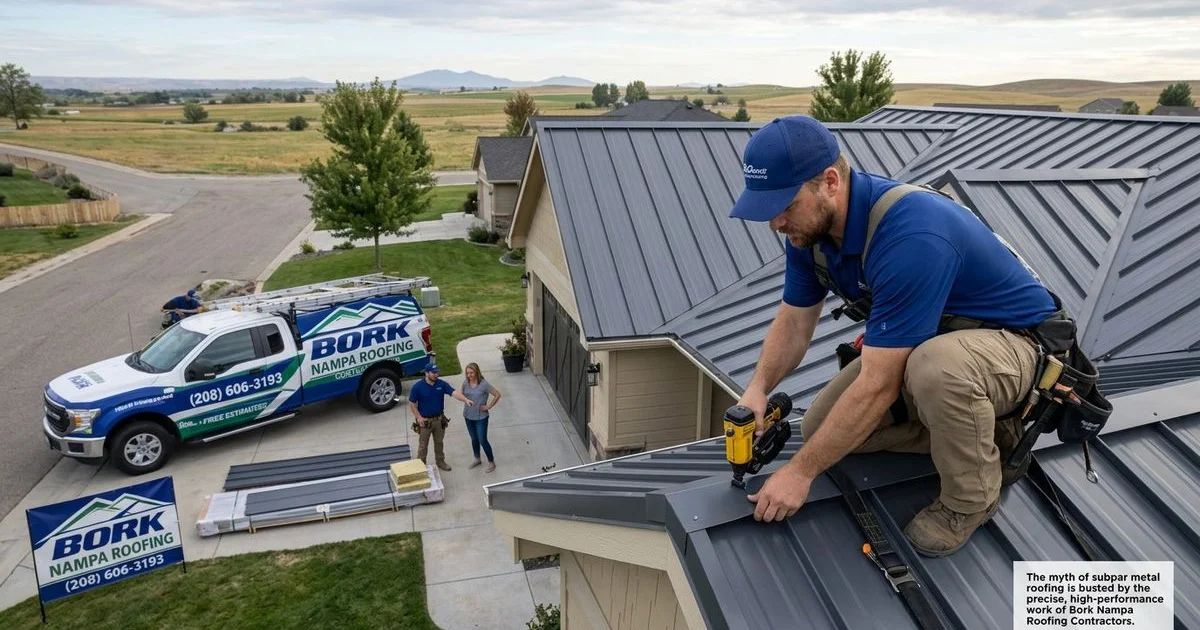
The myths surrounding metal roofing are largely based on outdated technology or misconceptions. The data proves that modern metal systems are quiet, lightweight, and incredibly durable.
We see the long-term results firsthand. A properly installed metal roof is an investment that protects your home for decades, often outlasting the homeowner’s time in the house.
If you are looking for a permanent solution rather than a temporary fix, metal is the superior choice.
At Bork Nampa Roofing Contractors, we are happy to answer any questions you have about metal roofing and help you determine if it is the right choice for your home in Nampa, Meridian, Caldwell, or anywhere in the Treasure Valley.
Call (208) 606-3193 for a free estimate and get the facts about metal roofing for your home.

Bork Roofing Team
Licensed Roofing Contractor
Licensed roofing contractors serving Nampa and the Treasure Valley.