Year-Round Roof Care for Idaho’s Demanding Climate
You know how people say if you don’t like the weather in Idaho, just wait five minutes? That famous unpredictability is exactly what makes maintaining a roof here so challenging. Idaho’s high desert climate subjects your home to temperature swings that can span 100 degrees between summer highs and winter lows, creating structural stress that standard maintenance plans often miss.
We have seen firsthand how this thermal shock affects roofing materials across the Treasure Valley. A 2025 report from Verisk indicates that roof repair costs have risen nearly 30% in recent years, making preservation far more economical than replacement. Our team developed this guide to help you stay ahead of those costs with a strategy built specifically for our region’s unique conditions.
Spring Checklist (March Through May)
Spring in Idaho is often a “false start” season where warm days are immediately followed by freezing nights. This freeze-thaw cycle is the primary cause of expanding cracks in masonry and sealants. March is the critical month to catch these small fractures before April showers turn them into active leaks.
Inspect for “Nail Pops” and Winter Shifts
We often find that thermal expansion pushes roofing nails up through the shingles during the spring thaw. Walk your perimeter and look for raised bumps on your shingle surface or shingles that appear slightly lifted. These “nail pops” break the seal of your roof and are a common entry point for water during spring storms.
Clear Cottonwood Seeds and Debris
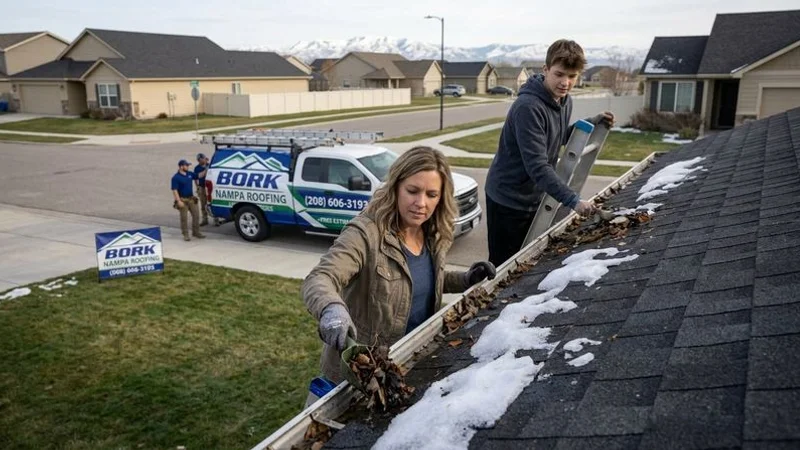
Treasure Valley homeowners know that cottonwood trees begin shedding their cottony seeds in late spring, often resembling a snowstorm in May or June. This fluffy debris mats down when wet, creating a dense, sponge-like layer in your gutters that refuses to drain. Our crews recommend cleaning gutters twice in spring: once in March to clear winter debris, and again in late June to remove the cottonwood buildup.
Check for Ice Dam Aftermath
The freeze-thaw cycle often leaves behind subtle damage at the roof’s edge. Look specifically at the bottom three feet of your roofline for “scuffing” or mineral granule loss, which indicates where ice masses scraped the shingles. If you see exposed asphalt or fiberglass, that section effectively has no UV protection left.
Verify Flashing Seals
We consider flashing the “weakest link” in any roofing system because it relies on sealant that can become brittle in cold weather. Check the metal strips around your chimney, vents, and skylights for any separation or dried-out caulk. A gap as small as a dime is enough to admit gallons of water over a rainy season.
Trim Trees for Wind Clearance
Spring storms in Nampa often bring wind gusts exceeding 40 mph. Any tree branch within six feet of your roof is a potential hammer waiting to strike during a gust. Trimming these back now prevents physical impact damage and reduces the amount of shade that encourages moss growth.
Schedule a Professional Assessment
We encourage booking your annual roof inspection in early spring before the summer rush begins. Professional roofers can spot “invisible” damage like micro-cracks in shingles or unsealed fern valleys that are difficult to identify from the ground.
Summer Checklist (June Through August)
Summer brings a different enemy: intense, radiant heat. With Nampa temperatures averaging in the mid-90s and frequently topping 100°F in July, your roof’s surface temperature can easily exceed 150°F. This extreme heat cooks the oils out of asphalt shingles, making them brittle and prone to cracking.
Monitor for Heat Blisters
We suggest scanning your roof after the first major heat wave of the year. Look for small, bubble-like blisters on the shingles, which occur when trapped moisture expands or volatiles in the asphalt boil. These blisters eventually pop, leaving pockmarks that expose the roof to UV degradation.
Compare Attic vs. Outside Temperatures
Your attic ventilation is your roof’s cooling system. On a hot afternoon, place a thermometer in your attic; if the temperature is more than 20-30 degrees higher than the outside air, your ventilation is likely blocked or inadequate. We have listed the signs of poor ventilation below to help you diagnose the issue.
| Healthy Attic Signs | Poor Ventilation Signs |
|---|---|
| Temperature is 10-20°F above outside air | Temperature is 40°F+ above outside air |
| Air feels dry and moving | Air feels stagnant, heavy, or humid |
| Insulation is dry and fluffy | Insulation is matted or damp |
| No rust on nails or metal plates | Rusted nails or condensation on wood |
Inspect After Summer Squalls
We know that summer thunderstorms in Idaho are short but violent. High winds can lift shingle tabs, breaking the adhesive seal that holds them down. After a storm, check for “zipper lines” where a row of shingles has lifted, or for debris that has accumulated in the valleys of your roof.
Manage Moss and Algae
The north side of your roof is a haven for moss, even in our dry climate. If you see green patches, treat them with a solution meant for asphalt shingles—avoid pressure washers, which can strip protective granules. Moss holds moisture against the roof surface, acting like a wet towel that rots the underlying materials.
Fall Checklist (September Through November)
Fall is the most critical season for prevention. The goal is to fortify your roof against the coming winter payload. Repairs made now adhere better because sealants cure properly in the mild temperatures of September and October.
Optimize Attic Insulation
We follow the Department of Energy’s recommendation for Idaho (Climate Zones 5 and 6), which suggests an R-value of R-49 to R-60 for uninsulated attics. If your insulation is level with or below your floor joists, you likely only have R-19 or R-25. Adding a fresh layer to reach the recommended depth helps keep heat inside your living space and prevents the roof warming that leads to ice dams.
Clean Gutters After the Final Drop
Local trees like maples and sycamores drop their leaves late, often into November. We advise waiting until the trees are completely bare before doing your final gutter cleaning. Any leaves left in the gutter over winter will freeze into a solid block, preventing snowmelt from draining and forcing water to back up under your shingles.
Seal Penetrations Before the Freeze
Cold temperatures cause building materials to contract, which can widen small gaps. Check the rubber “boots” around your plumbing vents; these rubber gaskets typically last only 7-10 years and are a frequent leak source. If the rubber is cracked or rotted, replace the entire boot rather than trying to caulk it.
Clear Valley Debris
We frequently see valleys clogged with pine needles and leaves that trap moisture. This organic debris decays and releases acids that can eat into asphalt and metal. Clearing these areas allows water to flow freely off the roof rather than pooling and freezing.
Secure Your Fall Inspection
Scheduling a check-up in the fall gives your roof maintenance contractor time to fix loose shingles or flashing before they become frozen and unworkable. Winter repairs are often temporary patches due to the conditions, so a permanent fix now saves money later.

Winter Checklist (December Through February)
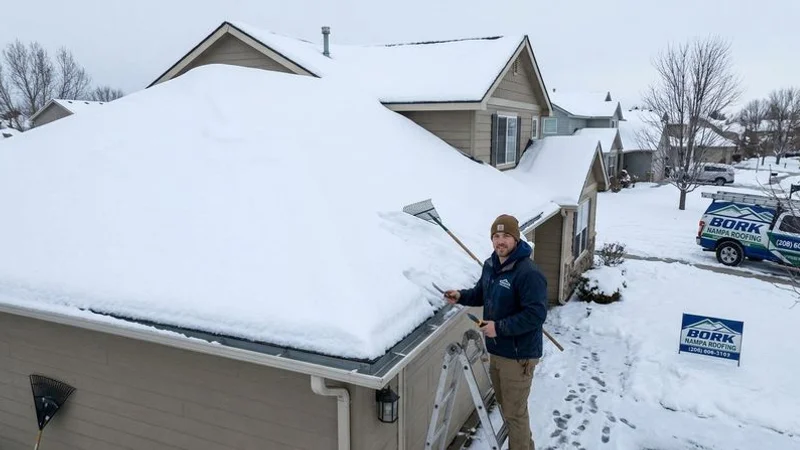
Winter in the Treasure Valley is about observation and safety. We strongly advise against climbing on a roof during winter due to the extreme slip hazard of frost and invisible ice. Your job now is to monitor the roof’s performance from the ground and the attic.
Monitor Snow Load Stress
Idaho building codes in areas like Meridian and Twin Falls typically require roofs to handle a snow load of at least 25 pounds per square foot (psf). However, wet, heavy snow can weigh significantly more than fluffy powder. Watch for internal warning signs of structural stress: interior doors that suddenly stick, new cracks in drywall, or popping noises from the ceiling.
Identify Ice Dam Formation
We consider icicles to be a warning flare. While small icicles are normal, a rim of ice along the gutter or icicles that form behind the gutter indicate an ice dam. This barrier prevents melting snow from draining, causing it to pool and seep backward under the shingles.
Manage Ice Safely
If you do spot an ice dam, never hack at it with a hammer or pick. We recommend using a calcium chloride ice melt product specifically designed for roofs (avoid rock salt, which damages shingles) or hiring a professional for steam removal. Physical impact on a frozen shingle will almost certainly shatter it.
Scan for Attic Moisture
Monthly attic checks are vital during winter. Shine a flashlight on the underside of the roof sheathing (the plywood); if you see frost or dark stains, warm moist air is leaking from your home and condensing on the cold roof. This is a ventilation and insulation issue that needs to be addressed to prevent mold.
Document Issues for Spring
We suggest keeping a “roof log” of any concerns you spot during winter. Take photos of ice buildup, potential leak spots, or sagging areas. This documentation gives your roofer a head start when weather permits a full inspection in the spring.
Make Maintenance Your Strategy
Consistent care is the only way to get the full 25-30 year lifespan out of an asphalt roof in Idaho. Neglecting these small tasks leads to premature failure, often voiding manufacturer warranties that require regular maintenance. A proactive approach transforms your roof from a liability into a reliable asset.
We are ready to assist you with every step of this process. Bork Nampa Roofing Contractors provides comprehensive roof inspections, professional gutter service, and tailored roof maintenance plans designed for the Treasure Valley climate.
Call us at (208) 606-3193 or schedule your seasonal inspection online. Your home is your biggest investment. Let’s work together to protect it.

Bork Roofing Team
Licensed Roofing Contractor
Licensed roofing contractors serving Nampa and the Treasure Valley.