How Do You Know When It Is Time for a New Roof?
Your roof rarely fails all at once. It usually gives you quiet warning signs years before a catastrophic leak forces your hand. In our experience working across Nampa and the Treasure Valley, we find that most homeowners don’t look up until water is already dripping through the ceiling. By that point, the structural damage underneath has often been building for months.
Here is the reality of roofing in Idaho that many people miss. The biggest risk isn’t just the water you see; it is the “silent rot” that destroys decking and insulation long before a stain appears on your drywall. We have seen minor issues turn into $10,000 repairs simply because they were ignored for one too many winters.
Let’s look at the data, what your roof is actually telling you, and the seven clear signs that it is time to stop repairing and start replacing.
1. Your Roof Is Over 20 Years Old
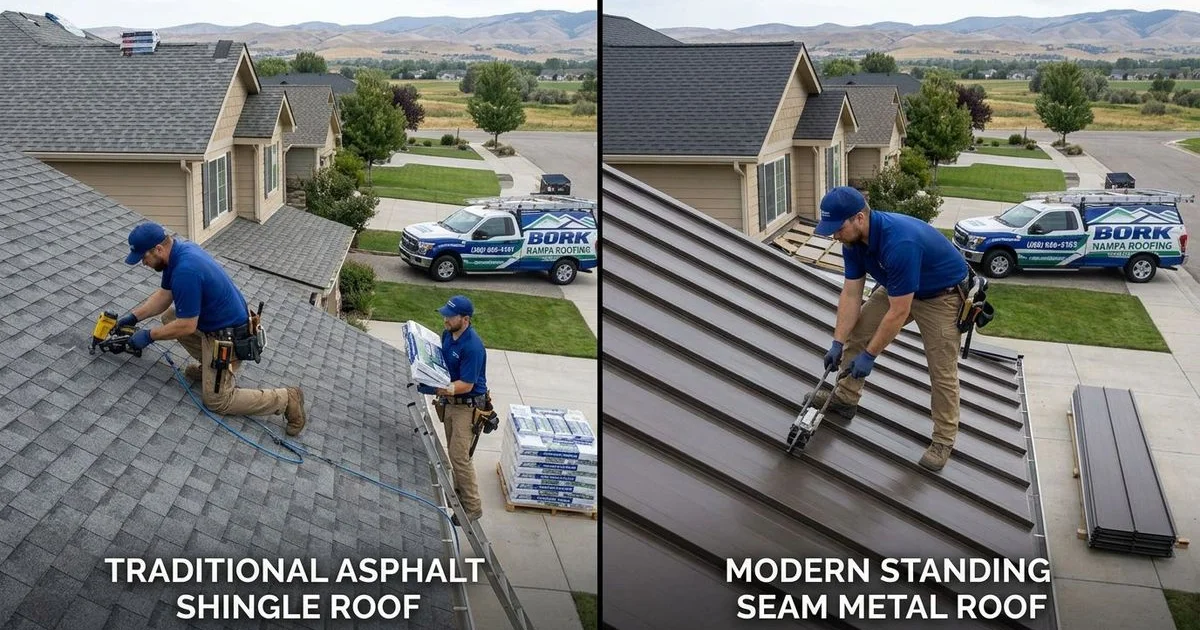
The most common roofing material in the Treasure Valley is the architectural asphalt shingle. While manufacturers often rate these for 30 years, our local climate tells a different story. Idaho’s intense “thermal shock”—where temperatures can swing 40 degrees in a single day—typically limits a standard asphalt roof’s lifespan to about 20 to 25 years.
You also need to be aware of a critical shift in the insurance industry affecting homeowners in 2026. Many insurance carriers are moving policies for roofs over 20 years old from Replacement Cost Value (RCV) to Actual Cash Value (ACV).
This distinction is financially massive. If a storm hits an older roof with an ACV policy, the insurer will only pay for what the old roof is currently worth, not the cost to buy a new one. You could be left paying thousands of dollars out of pocket that would have been covered if you had replaced the roof sooner.
Checking Your Roof’s Age
If you are unsure of exactly when your roof was installed, you can try these three methods:
- Check the Permit: Look up your address in the Nampa or Canyon County building permit records online.
- Ask the Previous Owner: If you bought the home recently, this disclosure is usually in your closing documents.
- The “Shingle Bend” Test: A professional can gently lift a shingle tab; if it cracks immediately, the asphalt has lost its flexibility and is near the end of its life.
2. Shingles Are Curling, Buckling, or Cupping
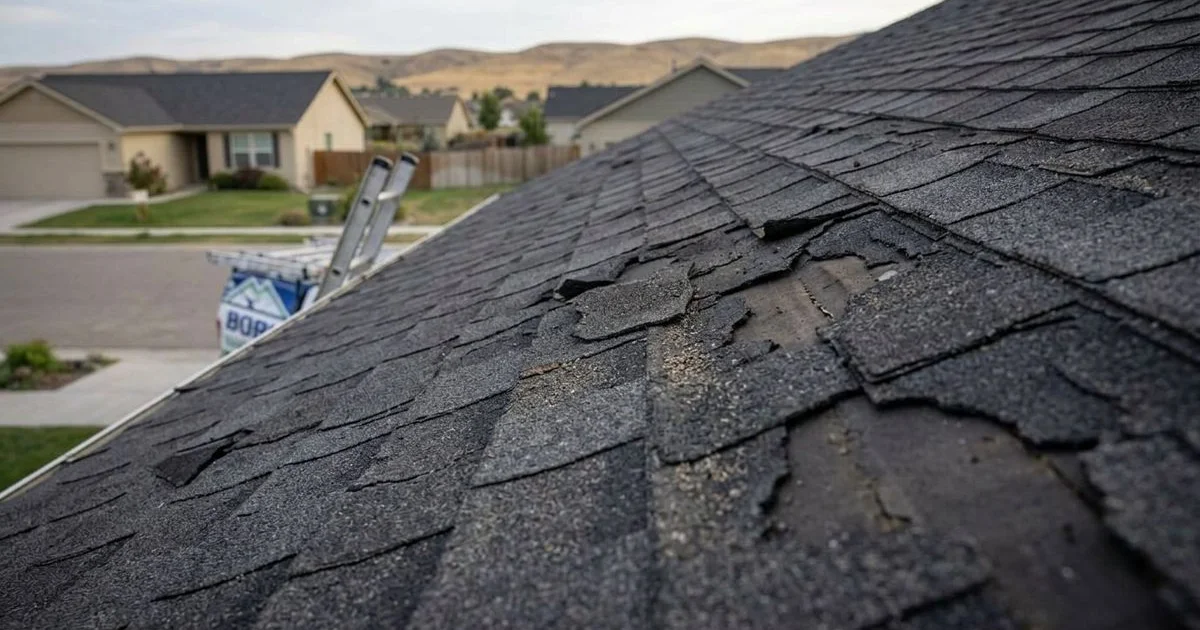
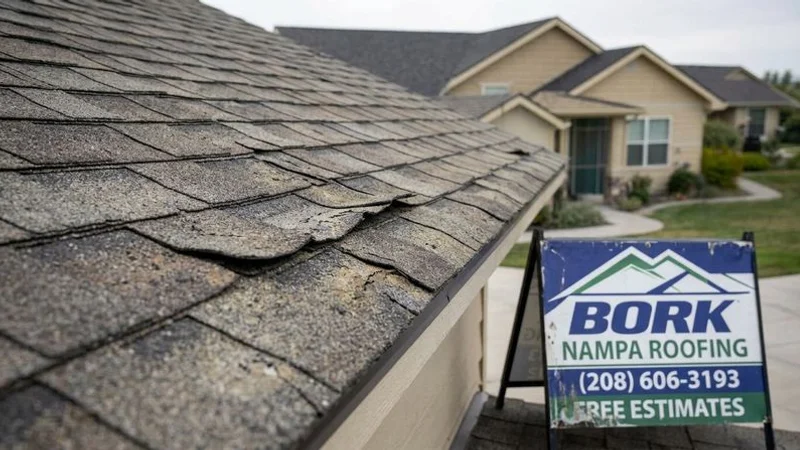
Walk out to your yard and look at your roof’s silhouette against the sky. Healthy shingles should lie perfectly flat against the deck. If you see shingles that are curling at the edges or buckling in the middle, the material has lost its structural integrity.
This failure is often caused by the asphalt drying out from years of high UV exposure in our high-desert summers. Once a shingle curls, it becomes brittle and can easily snap off during high winds.
Clawing vs. Cupping
| Sign | What It Looks Like | What It Means |
|---|---|---|
| Cupping | The edges of the shingle turn upward, creating a cup shape. | The center of the shingle is concave; usually indicates moisture is trapped in the attic. |
| Clawing | The edges curl downward and the middle humps up. | The material is shrinking and aging naturally; the shingle is “clawing” at the roof deck. |
| Buckling | A visible wave or ripple runs vertically up the roof slope. | The underlayment (tar paper) is wrinkled, or the roof deck boards have shifted. |
We recommend treating widespread curling as an immediate red flag. A few curled shingles can be repaired, but if more than 30% of the visible surface is distorted, a full replacement is the only way to guarantee a watertight seal.
3. Granules Are Accumulating in Your Gutters
Asphalt shingles are coated with ceramic granules that serve two critical purposes: they protect the asphalt from sun damage and provide fire resistance. Over time, these granules naturally wear off. If you notice a sandy, gritty buildup in your gutters or at the base of your downspouts, your roof is shedding its “sunscreen.”
You might think a little sand in the gutter is normal, but the volume tells the story. A new roof will shed some excess granules, but an old roof shedding heavy amounts is failing.
The “Dime” Rule
When you inspect your shingles, look for smooth, dark patches where the granules have completely worn away. We tell our clients that if you see “bald spots” larger than the size of a dime, the shingle is compromised. Without granules, the UV rays will eat through the remaining asphalt in a matter of months, leading to leaks.
In dry climates like ours, these granules also provide a Class A fire rating. Losing them doesn’t just risk a leak; it lowers your home’s defense against potential fire hazards.
4. You Can See Daylight Through the Roof Boards
This is the sign you absolutely cannot ignore. Go into your attic on a sunny day, turn off the lights, and look up at the underside of the roof deck. If you see pinpoints of light coming through, water is getting in too.
Even small gaps mean moisture is infiltrating your attic, which leads to mold, rot, and structural damage. In newer homes in Meridian and Nampa, this can be tricky to spot if you have a radiant barrier (foil insulation) stapled to the rafters.
You should specifically check around penetrations like plumbing stacks, chimneys, and vents. These are the most common failure points where the decking rots away, allowing light—and water—to pass through.
Pro Tip: If you see light, push on the wood near the hole with a screwdriver (if you can reach it safely). If the wood feels soft or spongy, you have active rot that requires immediate replacement of the plywood decking, not just the shingles.
5. Your Roof Has Dark Streaks or Moss Growth
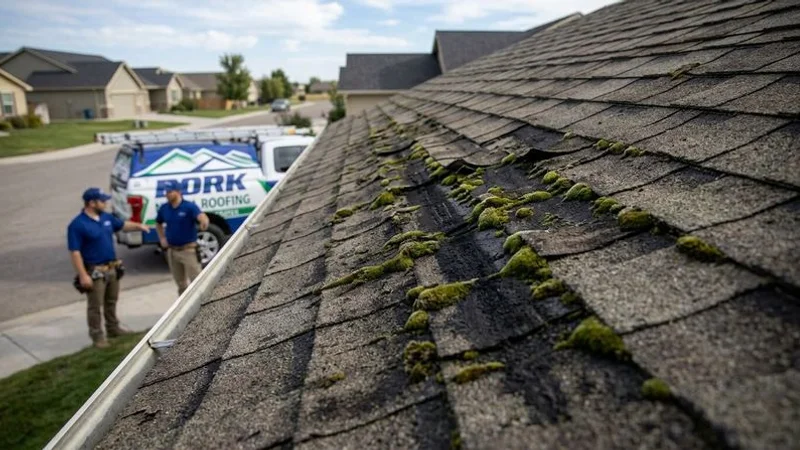
Dark streaks on your roof are caused by an airborne algae called Gloeocapsa magma. While the algae itself is mostly cosmetic, it signals that moisture is lingering on your roof surface longer than it should. Moss is a bigger concern because its root systems can lift shingles and allow water to seep underneath.
In Nampa’s climate, moss tends to grow on north-facing slopes and shaded areas where the roof stays damp. If you clean the moss and it returns within a season, the underlying moisture problem is systemic.
Passive Prevention with Zinc
When you do replace your roof, you can prevent this from happening again. We often install zinc or copper strips near the ridge of the roof. When it rains, trace amounts of metal ions wash down the roof slope, creating an environment where moss and algae cannot grow. This simple addition can keep your new roof looking clean for decades without pressure washing.
6. Flashing Around Chimneys and Vents Is Damaged
Flashing is the metal material that seals the joints around chimneys, skylights, plumbing vents, and where the roof meets a wall. When flashing corrodes, cracks, or pulls away from the surface, it creates direct paths for water to enter your home.
Older homes in the Treasure Valley often have flashing made from galvanized steel that eventually rusts through. Modern replacements use aluminum or copper, which offer far superior longevity.
The Missing “Kick-Out” Flashing
One specific defect we see in many local homes built before 2000 is missing “kick-out” flashing. This is a small diverter piece where the roof edge meets a vertical wall. Without it, water runs down the roof and directly behind your siding, rotting your wall framing without you ever seeing a leak inside.
If your flashing is visibly damaged or you notice water stains on ceilings near chimneys, the issue is critical. A professional inspection will determine whether new flashing alone will fix the problem or if the surrounding roofing material also needs replacement.
7. Your Energy Bills Are Rising Without Explanation
A failing roof affects more than just waterproofing; it also impacts your home’s insulation and ventilation. If your heating or cooling bills have been creeping up and you cannot explain why, poor roof performance could be the cause.
Heat escaping through a compromised roof in winter, or hot air infiltrating your attic in summer, forces your HVAC system to work harder. In fact, Department of Energy data suggests that a poorly vented, dark roof can push attic temperatures over 150°F in the summer.
The “Cool Roof” Opportunity
Replacing an old roof with modern materials can pay for itself over time. New “Cool Roof” asphalt shingles are designed to reflect more sunlight and absorb less heat.
- Savings: Homeowners can often reduce peak cooling demand by 10-15%.
- Tax Credits: As of 2025, installing qualifying energy-efficient roofing materials may make you eligible for federal tax credits under the Inflation Reduction Act. Check IRS Form 5695 for current details.
What Should You Do If You Spot These Signs?
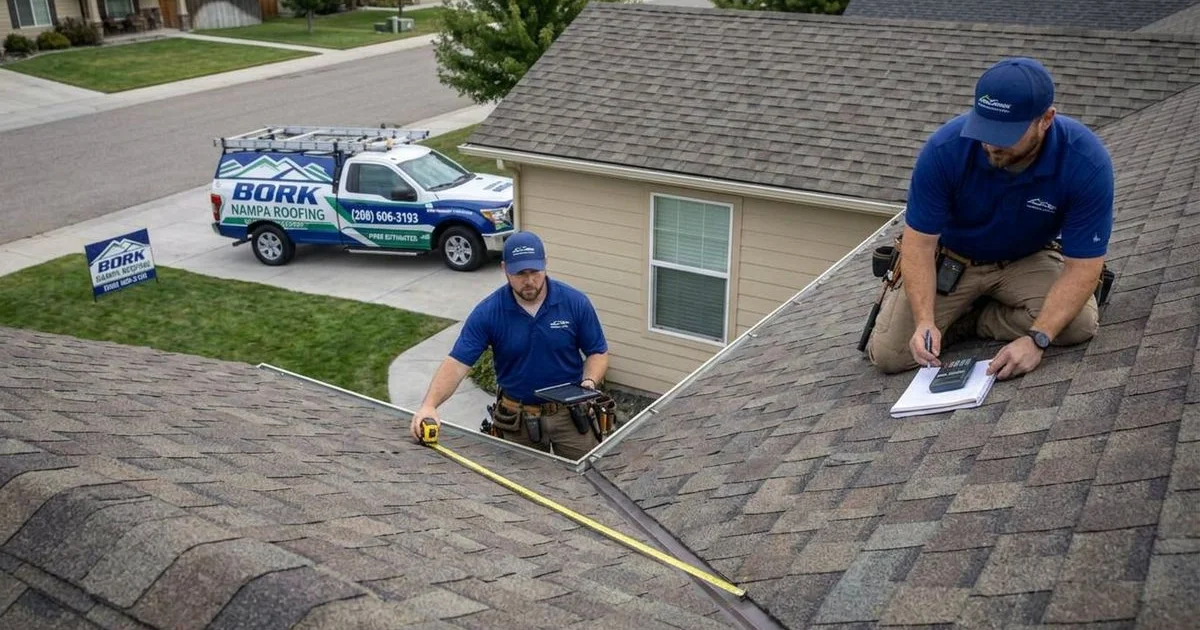
Seeing one or more of these issues does not automatically mean you need a full replacement tomorrow, but it does mean you need a professional evaluation. A qualified roofing contractor can determine whether targeted repairs will extend your roof’s life or whether replacement is the more cost-effective path forward.
The worst thing you can do is wait. Small problems become expensive problems in Idaho’s climate, where freeze-thaw cycles can turn a minor gap into a major leak over a single winter.
Schedule a Free Roof Inspection
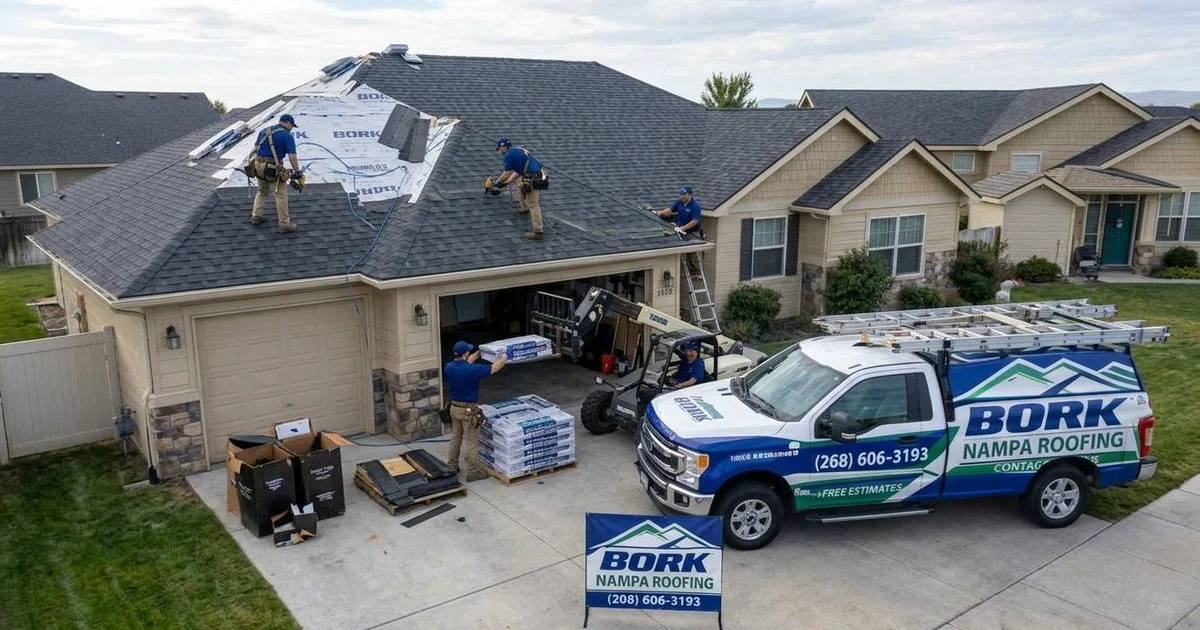
At Bork Nampa Roofing Contractors, we offer free, no-obligation roof inspections to homeowners across Nampa, Meridian, Caldwell, and the surrounding Treasure Valley. We will give you an honest assessment of your roof’s condition and walk you through your options without any pressure.
Call us at (208) 606-3193 or schedule your free inspection online today.

Bork Roofing Team
Licensed Roofing Contractor
Licensed roofing contractors serving Nampa and the Treasure Valley.